
Mondli Hlatshwayo* argues that the ASM has proved critical to international co-ordination of working class struggles, notwithstanding some on-going weaknesses.
The Assembly of Social Movements (ASM) at the World Social Forum (WSF) is becoming one of the important centres for international mobilisation against war, occupation and imperialism. This article discusses the evolution of the ASM, its major mobilisation points, its activities in the most recent WSF in Kenya as well its significance as a site of international mobilisation.
The evolution of the asm as a platform for reflection and action
In 2001, during the first World Social Forum in Brazil, more than a thousand people representing hundreds of social movements, NGOs and trade unions of the whole world gathered in a common assembly and, with a feeling of strong unity, approved the first “Porto Alegre Call of the Social Movements for Mobilization”. It called on social movements to mobilize against a series of institutional events in the year ahead, such as the annual meetings of the World Bank and IMF, the ministerial meeting of the WTO and the G8 Summit in Genoa. The constituting of the first ASM was important because it represented an international convergence of social movements that seek to not only reflect on imperialism and neoliberalism but also take action to ensure that the international working class is able to actively chart a path for an alternative world. The ASM thus emerged out of the first WSF as an autonomous initiative, not formally connected to the WSF but convening there.
In 2002 in Brazil, the second call for action statement issued by numerous social movements expressed a level of consensus against foreign debt payment, opposition to the U.S. war in Afghanistan and solidarity with the Palestinians.
The February 15, 2003 anti-war protest was a coordinated day of protests across the world against the imminent invasion of Iraq. Millions of people protested in approximately 800 cities around the world. The call for international protest had been endorsed by the ASM at the WSF in Porto Alegre the month before. The scale of action led by world social movements was an indication that the ASM can emphatically be used as platform for reflection and action against war, occupation and imperialism.
While the WSF 2004 in Mumbai was regarded as a festival of the masses, the ASM and the anti-war assembly noted a decline in anti-war moblisation. But while the anti-war assembly sessions were well organised and had deep reflection on previous moblisation against the war, the ASM was poorly organised, with little participation of Indian social movements. Another international call for action was issued but the subsequent response was lower than the one of 2003.
In 2005 the WSF went back to Brazil. Social movements noted that the second anniversary of the occupation of Iraq was coming closer and issued another call for mass mobilisation against imperialism, neoliberalism, the war and occupation of Iraq. Again, the mass mobilisation declined.
In 2006 the Polycentric World Social Forum in Caracas was characterised by the Latin American leftwing electoral victories in Venezuela and Bolivia. Among other calls, the most signifcant one, once again, was the call for moblisation on March 18th 2006 for a day of global protest against the occupation of Iraq as part of the campaign to get the troops out.
The important observation that can be made on the calls coming out of the Assembly is that since 2004 international mobilisation against the war and imperialism has been declining. The problem is that the ASM has not discussed the reasons for this decline. Instead, further calls are issued. While calls are critical as part of mobilization, there has to be some evaluation of the previous action with the view to building a world movement against imperialism.
The assembly of social movements in Kenya
During the build-up to the WSF in Kenya the role of the ASM was not clear, partly because the WSF Secretariat in Nairobi had decided to construct a programme which declared the fourth day of day of the WSF as a day of sectoral strategies and actions. This role is normally played by the ASM. According to comrade Jose Chacon, a member of the WSF Secretariat in Kenya, the change in the programme as well as the inclusion of plans of action stem from the fact that some critics have been arguing that the WSF is just another carnival which takes no action. The criticism is misplaced because, as demonstrated in this article, the ASM, an autonomous gathering at the WSF, did take action against the war and imperialism since its inception in 2001.
Another source of confusion came from organisations that are responsible for organising the ASM. For example, the South African Social Movements Indaba (SMI) had planned to use the ASM as a platform to build links with other stronger social movements such as MST, Via Campesina and Attac. But there was no clarity about the plan for the ASM until the intervention of the Focus on Global South, a Thai organisation.
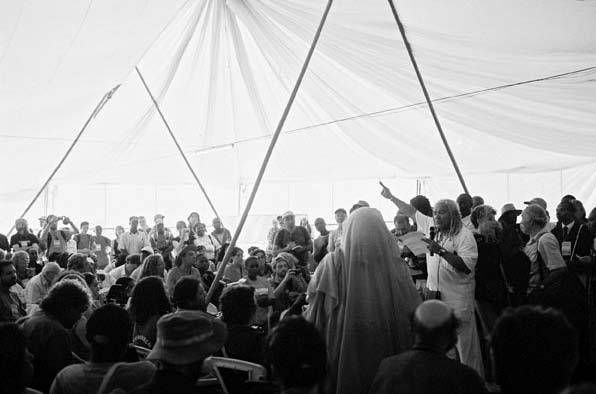
The ASM did convene on 20 January, with a large turnout of activists. The Assembly registered a number of concerns about the form and organisation of the WSF in Nairobi. Firstly, the day before the closing day of the forum has traditionally been used as a day for endorsing a call of social movements. The WSF used that day as a day for the planning of international sectoral actions. The concern that was raised by the ASM was that this would cause a fragmentation of social movements. Suggestions were then made to address this problem.
The second, major concern that dominated the politics of the WSF in Kenya, was the commercialisation of the WSF and the subsequent exclusion of the Kenyan masses from the WSF. The involvement of big business, high registration fees, the presence of a hotel and catering company linked to a minister of internal security who was involved in the persecution the MAU MAU freedom fighters during colonialism as well as the presence of rightwing groups that undermine women, gay and lesbian groups were cited as signs of regression in the politics and the spirit of the WSF. After deliberations, it was agreed that these issues would be raised with the organising team of the WSF and the International Council. Another proposal was to take action which would ensure that Kenyans entered the forum free of charge. Kenyan social movements did not have a strong presence at the first assembly. However, a number of Kenyan activists were concerned about the manner in which the organisation of the forum was dominated by certain NGOs which had little or no connections with the masses.
In the afternoon of the 24th of January, the concluding ASM was convened at the Amilcar Cabral Hall, named after one of the African liberation icons. With over a thousand delegates in attendance, a draft statement and a call for action were read to the delegates. The draft statement noted the significance of holding the forum in Africa as a process of building an anti-imperialist platform in the continent. It also denounced the commercialisation of the WSF in Nairobi and the exclusion of Kenyan masses as a result of high registration fees. There were also calls for the intensification of the struggle against war and imperialism in the world. A number of days of actions were agreed upon. Key among these is the 20th of March 2007, which was highlighted as the international day for mobilisation against the occupation of Iraq.
The future of the assembly of social movements
As shown in this article, the ASM is an important centre for organising and coordinating international resistance against war and imperialism. In 2001 the ASM was critical in organising the Genoa protests. In 2003 it co-ordinated a more generalized mobilisation against the impending occupation of Iraq. However, these high mobilisation points were followed by a period of decline in international mobilization, a feature noted by the ASM in Mumbai in 2004.
Concerning the African continent, besides the participation of individual activists and NGOs in some of these anti-imperialism events, African involvement and participation has been very weak. This has to do with the fact that Africa still has the task of building a popular movement against imperialism and war. The launch of campaign networks such as the Africa Water Network in the WSF in Kenya and other planned campaigns may provide an impetus for building national and continental campaigns.
Social movements taking part in the ASM and other international mobilisation efforts are now discussing how to consolidate these initiatives. There is communication about the implementation of the calls as adopted by the assembly in Kenya. A challenge facing the ASM in particular is a lack of continuity and reflection on action that had been taken in previous years. The adoption of calls without an assessment of the previous actions has a danger of turning calls into rituals. Notwithstanding some weakness around coordination and plans for the meetings, the world Assembly of Social Movements nevertheless remains a focal point for international mobilisation.
Leave a Reply
You must be logged in to post a comment.