
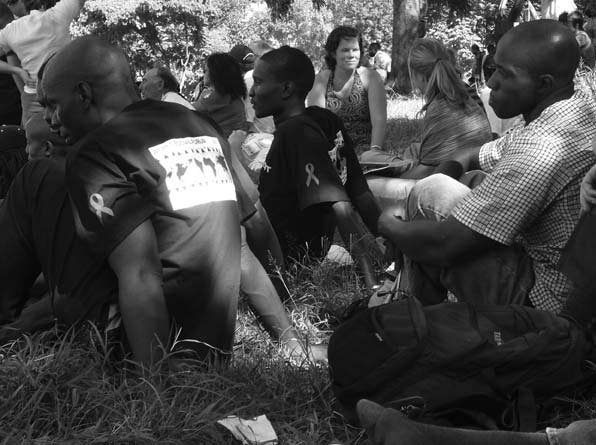
The HIV/AIDS STRUGGLE
Regis Mtutu* recounts the discussions and debate around the HIV/AIDS struggle and argues that an important contribution was made in Nairobi, despite some problems.
The WSF in Nairobi was an “opportunity to showcase Africa and her social movements, Africa and her unbroken history of struggle against foreign domination, colonialism and neo-colonialism.” The theme of the 7th edition of the WSF was “People’s Struggles and People’s Alternatives”. The Treatment Action Campaign (TAC) participated in the Forum along with thousands of other social movements from the world over.
For the first time HIV/AIDS was listed by the WSF Organising Committee as a co-activity. HIV and AIDS in all previous WSF Summits have hardly featured as a key agenda. Even where HIV and AIDS activists have participated in the Forum, they have not had a very high profile. TAC joined other continent-wide, like-minded networks working in the field of HIV and AIDS to harness efforts towards recersing the status quo.
The Planned activities were composed of broadening the HIV and AIDS discourse on how the ethics of international relations could contribute to reducing the impact of the pandemic, especially on women and children, and to prevent the emergence of new cases of infection in the future.
The co-organised activity was therefore made up of dialogues and presentations that analysed the complex trail of social-economic and political forces that create widening global disparities in wealth and health and affiliated niches for emergence of new cases of HIV infection.
The TAC team were key participants in plenary sessions within the co-organised events as well as the self organised activities. This did not leave much room for most of the team to also participate in the hundreds of self organised workshops, meetings, seminars and rallies that are not directly connected to HIV and AIDS but would have been beneficial in broadening our understanding of not only the WSF but the various struggles that were part of this event.
Brief on thE HIV and AIDS sessions
21-24th January, 2007
21 January
Access to hIv and aIds treatments
While the presentations reflected the diverse circumstances of each country questions and issues that emerged from the session included the following:
- Women continue to be part of the disadvantaged
- There is need to find newer and creative ways of activism, for example by forging people to people linkages at all levels
- There is a need to hold our leaders accountable e.g. the embezzlement of Global Fund in Kenya
- Most African countries are still dependent on donor funds for treatment
Life Before Profits – Demystifying and Defeating HIV and AIDS
The Following were questions and issues that emerged from session:
- Control of HIV and AIDS should not be made confidential as disasters in Africa were never confidential but communal
- Are women with special needs (those who have been raped, for example) being considered in order to avoid primary infection
- Getting people to know their HIV status was still a challenge
- The Commitment of national AIDS Counsils was questionable as they had parasitic tendencies and often prioritised other issues such as IEC materials ahead of medicines
- Debt repayment should never be at the expense of development and the people.
22nd January
Addressing the Stigma- Positive People’s Village
This was an opportunity for children, women and men living with HIV and AIDS from Africa and Asia to share experience. The Village was ongoing and also provide free meals for people living with Aids throughout the WFS
23rd January
women and aIds -’’uniting to End violence against women”
The speakers were all women activists working in organisations and social movements predominantly made up of people living with HIV and AIDS.
The major points of discussion that emerged were that women in boththe global South and North face not only staggering rates of HIV infection, but also unabated levels of violence, whether at the hands of male partners, police or community members. Activists argued that when women are or even perceived to be HIV positive they are at risk of violence, discrimination and other human rights violations. And when women are sexually assaulted, whether in conflict situations or in their homes, they are at risk of contracting HIV. There is urgent need for activists and policy makers to make links between these two crises as they create and reinforce each other. Suksma Ratri from Indonesia concluded that:
“Women’s HIV and VAW advocacy are grounded in ideas and practices of resistance: resistance to the virulence of HIV transmission, resistance to pervasive experiences of violence, resistance to governmental complacency and resistance to sexist and discriminatory attitudes and preju- dices.”
24 January
developing alternatives in the Pan-african fight against hIv/aIds.
The last day provided an opportunity for social movements, organisations and activists working in this sector to come up with the following alternatives:
- No more new commitments!! Simply take action now and fulfill the commitments already made, especially the commitments towards universal access.
- An end to rape and all forms of gender-based violence.
- Focused social mobilization strategies for an emergency response to HIV&AIDS.
- Invest in the strengthening of health systems, particularly primary health care.
- African governments to mobilize domestic re- sources to end AIDS
- We will not pay debt because dying people can- not pay debt.
- International Aid towards fighting AIDS must respect our methods and tools and not dictate to us what to do
- We, the global AIDS advocates today, resolve to mass action to hold our governments and all other stakeholders to ACTION NOW!
The state of activism in HIV and AIDS, the wsf and beyond nairobi
There has been criticism of the WSF Nairobi that Africans were never in control of the processes and events. Instead, it was the NGOs, especially those from the north who pulled the purse strings, who influenced who came, what was said and not said. This was particularly the case for those working in HIV and AIDS. The Oxfam, World Vision, Action AID and PEPFAR driven local NGOs dominated. Many African participants, even many from Kenya, were sponsored and funded by outside bodies. This is not necessarily a bad thing as we need to define solidarity and in what forms it must come.
The social movements struggling around HIV/AIDS are still a long way off from being strategically prepared in terms of participation and preparedness. But a collective pat on the back is due to all in this sector for putting HIV and AIDS on the WSF map and agenda and motivating international solidarity in the fight against the pandemic. I think we have made an impact for the future agendas of the social forum. This arises from the fact that, unlike most sectors, it is an accepted principle that it is those infected who are leading the process. This has given the movement the strength to stand up to donors and funding partners.
There is an appreciation on a collective and individual basis to the very wonderful and passionate participation that most activists and participants engaged in at the WSF. One of the most vibrant centres of activity was on HIV and AIDS.
A colleague who is often critical but attended the forum commented to me thus: “It looks to me like it was only the HIV and AIDS people who left the WSF with a real product to work on into the future…. the rest seemed rather lost in it”.
We now need to do all we can to capture the very important issues discussed and turn these into actions. We have learnt our lessons from our strength and weaknesses and we will surely use it to make a difference in the fights against AIDS. All of us need to consider dwelling more on our strengths so we can generate the necessary positive energy needed to confront AIDS. Together we will all succeed.
aluta continua !
regis mtutu is the International solidarity co- ordinator of the treatment action campaign (tac).
I Rise
sylvia fynn
I’ve lived for a long time
Drowning in pains that soon become sorrow. Lost in sadness that felt like agony
Trapped in a loneliness I soon Comprehended as exile. For I felt alone And without comfort in my own country Amongst my own people.
Today as I disclose, I tell it like a
Fairytale of days long gone by.
From my family I was isolated Scared that I’ll give them my virus. Chased from my flat, people Gossiping sharing stupid thoughts That I’ll infect them through the Facilities we share.
Away from my community and civil life. I built a shack and started a garden.
In my mind and heart I said I will rise.
I will rise for all the days I was down.
I will rise for all the bodies that can rise no more.
I will rise for all the babies who lost the chance to. I’m a TAC activist.
An advocate for a life easier lived.
Fighting for gender equality and better resources. I’m a woman of solid ground and high beliefs.
My ambitions keep me afloat.
Ambitions to change the South Africa I live in
Above it all I rise.
I urge my brothers and sisters
To rise along with me. In the end I assure you
South Africa will rise along with us. Doing away with stigma and poverty.
But being rich with love, hope and togetherness. South Africa I Rise. Rise along with Me.
Don’t let HIV rule our lives
Let’s drive it out and away.
Leave a Reply
You must be logged in to post a comment.