
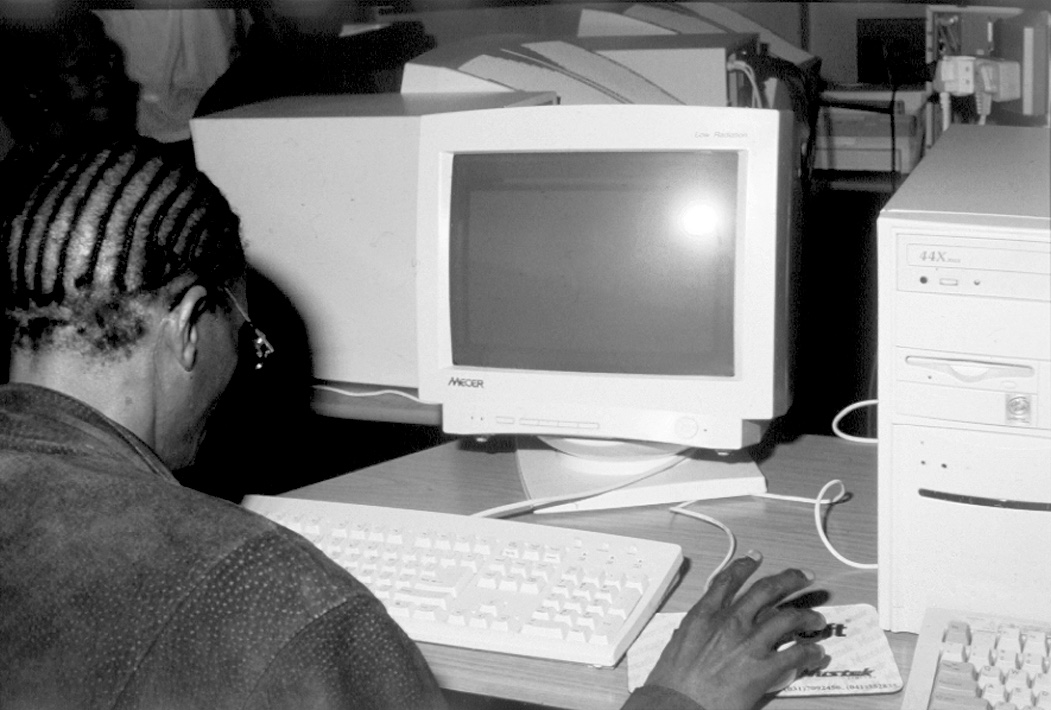
Mandlenkosi Mpofu* argues that the ICTs have increased the role and presence of civil society against states and powerful corporates
Since the mid-1990s, the world has witnessed rapid developments in the arena of information communication technologies (ICTs), generating hopes that government and corporate dominance of the media will be challenged by the rise of alternative and interactive publishing paradigms that will be spawned by the World Wide Web (WWW). The article argues that these developments have increased the role and presence of civil society. There has undoubtedly been more coordination among NGOs and social movements working in a range of areas. In cases where political repression has increased (such as in Zimbabwe), new media technologies (NMTs) have presented these movements with a rallying point for mass organisation and agitation. At a global level, there is hope that NMTs will contribute to the building of a strong global civil society that can effectively counter the actions of states and powerful corporate interests.
Globalisation and social movements Increased global interconnectedness has made it possible for social, cultural and political movements to increase their presence in three ways. First, it has allowed them to reach out to networks across the whole country (and in some cases the entire region/continent) with minimal costs through the use of ICTs and NMTs. Secondly, the explosion of online newspapers, online discussion forums, email listserves, web portals, blogs and wikis has meant that social activists have been able to spread their messages across barriers that may be erected by national governments in order to silence dissenting voices. The new technologies have rendered old information barriers ineffective, making it almost impossible for states to control information flows, Besides facilitating cheaper, faster communication, the internet, in particular, has played a significant role in transforming the activities of NGOs and civil society organisations. Finally, the ubiquity of the new media has made it difficult for authoritarian regimes to conceal their malpractices. Increased focus on government activities world wide has meant that there have been more calls for accountability and transparency on the part of the leadership.
Zimbabwe
In Zimbabwe, the tense political situation that has been characterised by an increase in civil militancy which has been complemented by an unprecedented mushrooming of online newspapers, ‘pirate’ radio stations and online discussion forums focusing on the political and economic crisis in the country. Undoubtedly, this growth has been influenced, in part, by the increased internal repression of the mainstream media by the government, which has closed up to four newspapers in a space of three years.
Further, this growth has been fuelled by the need for alternative views, in a situation where the government owns the only two dailies circulating in the country and all the radio and TV stations. The economic hardships wrought by accumulative mismanagement and the biting IMF-sponsored neo liberal economic reforms in the 1990s set the stage for the establishment of private newspapers, whose acerbic criticism of the government meant that for the first time since independence, the government was under pressure to be more accountable to the masses.
However, it was not long before the government found a way of either shutting these outlets down completely, as in the case of the Daily News, The Daily News on Sunday, The Tribune and The Weekly, or severely curtailing their activities through legislation such as the Access to Information and Protection of Privacy Act (AIPPA) and the Public Order and Security Act (POSA). In response, journalists who had left the country after either political persecution or joblessness began to set up online newspapers and radio stations in exile. The newspapers proved to be popular with Zimbabweans back home and the ‘pirate’ stations have cultivated a loyal listenership.
Through these platforms, many issues that would otherwise receive little or no attention, such as divisions within the ruling ZANU (PF), are discussed openly in online forums by civil society activists. While it is also correct to argue that these online forms of organisation are exclusive to only those with access to the internet, it is also true to argue they can be used as a starting point for the mobilisation of the whole Zimbabwean society. Mass based organisations such as the National Constitutional Assembly, Crisis Zimbabwe Coalition and student bodies use these forms to communicate with their members and the rest of the world through not only their own websites, but also through portals such as Kubatana.net.
Global civil society
Perhaps the most significant role of NMTs has been facilitating the growth of what for the first time can be called a truly global civil society. Many issues in the world today are internationalised, which is why social movements and labour unions are increasingly operating as international networks. Under globalisation, the boundaries between the state and the market have also become increasingly blurred, leaving social movements and NGOs alone to protect citizens ‘abandoned’ by the state. Global social movements and international NGOs have taken advantage of NMTs to set up networks across the globe and to raise awareness about their programmes to wider audiences. There are also numerous examples of global pressure groups mobilising on a whole range of issues such as global poverty, climate change and global warming, etc. usually at international forums such as the G8 summit.
Within the Southern African region, labour unions have become more integrated as can be seen in the interest take by the Congress of South African Trade Unions (COSATU) in political repression in Zimbabwe and Swaziland. Specialised groups such as the Gender and Media in Southern Africa (GEMSA) also exploit NMTs to tackle issues like gender-based violence and child abuse, and more importantly use these media to implore governments and other stakeholders to implement policies that can address these issues. Media organisations such as the Media Institute of Southern Africa have also used similar methods to advocate media freedom and pluralism.
Leave a Reply
You must be logged in to post a comment.