
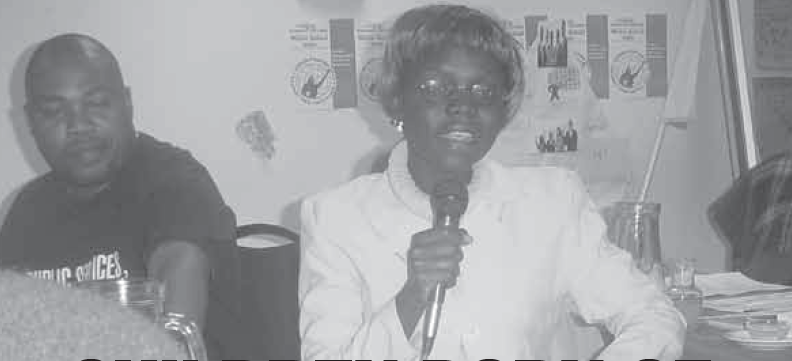
Eunice Apio argues that the children born out of conflict and abduction by the Lord’s Resistance Army in Northern Uganda, should be reintegrated, together with their mothers, into society.
Uganda is experiencing an unusual phenomenon of children born out of conflict as a result of the rape of abducted minor girl children. This has raised issues of legality, rights and the integration of these children. A study was undertaken recently to look into this. This report is based on that study.
Over the last 19 years a civil but baseless war has raged in Uganda between the Uganda Government Army (UPDF) and the rebel group called the Lord’s Resistance Army (LRA). This war has scavenged and thrived on the local population with impunity. This has resulted in the deaths of more than 25,000 people, the abduction of over 25,000 children (as at 2002), the destruction of property, livelihood, social and cultural norms and the displacement of over 1.5 million people into camps. Now there is the emergence of completely new categories of children.
Children born of war
Uganda today has a lost generation of children born in war, a category which includes children born of the LRA through the abduction and sexual slavery of thousands of girls from northern Uganda. These children have no sense of identity in terms of nationality and family ties. Some of them were lost in the bushes of the Sudan during the confusion of the war. They have missed out on education as a result of the prolonged conflict. They are born and bred in violence.
These children born of war grow up being looked upon as rebels, murderers, an accident of nature, and an outcome of rape. The children’s fathers are LRA combatants, who have caused endless suffering to the children’s families and communities. The children represent the scars and the symbols of the war: rape, maiming (like chopping off of lips, arms and ears), cold-blooded murders, massacres, abductions, and pillage and wreckage of the once peaceful and progressive society. The children born of these rebels are automatically blamed for the acts for their fathers. This perception of these children born in captivity has infected entire communities where they live.
They are regarded with disdain and are stigmatised to the point of utter rejection. Even if a family decides to treat the child well, such families carry the burden of prejudice from the community and are often accused of being sympathetic to the rebels.
Children’s rights denied
These children face many challenges including the lack of legal provision to foster their welcome and acceptance. There are no integration mechanisms specifically tailored for children born out of armed conflict. They also face psychosocial challenges including long confinement in conflict situations; rejection by the family and community of their parents; and denial of their basic rights such as the right to a name and a nationality, immunisation, food, parentage and recreation.
Sadly, according to the results of the study, the majority of children have traumatic names, often a lament of their captive child mothers. In this way the baby is turned into a live reminder of her sufferings. This affects the reintegration of the mother because the scars of her captivity remain by her side in the form of her child and are confirmed by the meaningful name still clinging to him/her. On the part of the children, innocent as they may be, in the long term their names can lead to self- chastisement as they may consider themselves an accident that brought overwhelming suffering to their young mothers.
There is also a looming debate over the nationality of these children. The majority of them are born outside the border of Uganda in the jungles of turbulent southern Sudan. People, including these children are therefore asking where they belong. The international standard of the right of citizenship by birth may not apply in Sudan because they are considered illegal immigrants; both the governments of Sudan and Uganda do not give them legal passage. Their presence in Sudan is not officially acknowledged, neither are they catered for by the Sudanese government including registration of birth and immunisation. The onus is therefore on Uganda to accept these children by descent and ensure that they as well as the communities understand the same.
The study revealed that of the sampled 69 children born in captivity, 66 were only immunised when they returned to Uganda. Only one child was immunised in the Sudan LRA camp because he was the son to a high-ranking commander. This child had preferential treatment, accessing health facilities in Khartoum. This therefore implies that the health of these children, for as long as they remain in the enclaves of the LRA, is jeopardised.
Solace in darkness
The study also revealed that the children tend to find solace in darkness. This shows their desperation for survival: only under the cover of darkness can they go unnoticed and uncondemned. They mentioned that the military as their greatest fear. Being part of the LRA they have been hunted down by the UPDF and they see them as the enemy. In principle this is worrying because the military is meant to protect civilians and the innocent, including children.
Uniting them with families
The issue of uniting these children with their mothers’ families and communities is a very complex one. Most girls who return with pregnancies are held back in centres until after birth, partly to safeguard them from forced abortion by their families. Some child mothers who were already reunited with their family also escaped back into the reception centres citing unfriendly terms with family because of their children. There are others calling for another try with the LRA, claiming it offers a much better life where one can comfortably identify one’s child with the rest in the LRA community without any discrimination.
The Universal Declaration of Human Rights (UDHR) forms the basis for protective measures to ensure that children in general are accorded maximum protection for proper growth and development regardless of their circumstances.
These include the United Nations Convention on the rights of the Child (UNCRC) and the African Charter on the Rights and Welfare of the Child (AVRWC). More specifically, there are measures including the UNCRC on Involvement of Children in Armed Conflict to ensure that children are never involved in armed conflict, are safeguarded, and even supported to assimilate back into normal life. If all these provisions are well implemented at domestic level, they can support the respect and promotion of children during armed conflict, especially their involvement as combatants, as well as their disarmament, demobilisation and reintegration.
However, there are no provisions specific or even exclusive to children resulting from situations of armed conflict. The best that can be done is to attempt to justify a place for them in the existing framework. Uganda is party to most international and regional instruments with a commitment to observing the human rights prescribed in them. It must therefore put in place appropriate legislation to protect these children. At present Uganda has children’s rights enshrined in the country’s constitution and in the Children’s Act of 1996 but this is not enough.
Children born in this category require comprehensive measures tailored to meet their special needs, which must work towards cultivating an accepting environment at all levels. These measures must keep in mind that the fathers of these children have been accused of committing many atrocities among the locals and their neighbouring tribes. The community may therefore find it extremely difficult to accept a child fathered in such a manner. The mother ’s family may find it extremely difficult to accept and receive a stranger alongside their abducted daughter, which raises issues of legitimacy.
Reclaiming the Children
There are some mechanisms in place to assimilate children born in armed conflict, into fairly normal lives. These are being run by non-governmental organisations at different layers including reception centres. Others run follow-up programmes for children reunited with families. Some others have adopted a few children and keep them on the village premises. Pilot projects are mainly supporting child mothers returning from the LRA, otherwise, psychosocial support for war-affected children in northern Uganda is basically and generally on the same principle, that is, de-briefing a child combatant and family tracing.
However, issues associated with sexual abuse are not in the mainstream of support offered to these children. There are no special and direct programmes in place to support the assimilation of children born in armed conflict. This is a huge loophole, which has implications for the assimilating mother. For an effective reunification of mother, family and community, children born in captivity have to be included alongside their mothers.
The lack of proper mechanisms for children born in such conflict situations will impact negatively on their reintegration into society. International interventions and provisions are overwhelmingly recommended. Such responses will also form the basis for interventions globally where such cases exist or may arise. For the sake of all children, let us put a stop to this situation and may it never occur elsewhere.
Eunice works for the Facilitation for Peace & Development (FPAD) in Uganda
Leave a Reply
You must be logged in to post a comment.