
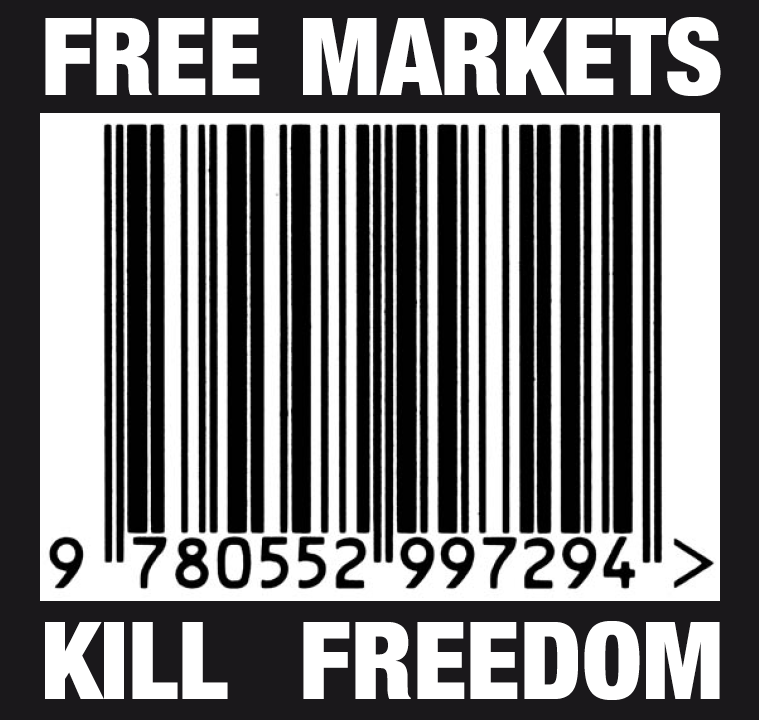
Khanya College (KC) hosted its sixth annual Winter School from July 4-10 2004 in Johannesburg. The theme for 2004 was “Neoliberalism and Democracy”. This theme arose out of the discussions on the New Partnership for African Development (NEPAD) at the previous winter school, as well as the current situation in Africa.
Background to the Khanya College Winter School
The Winter School is an annual event that was launched in 1999. Since its inception the School has aimed to bring together activists and development practitioners from all over South Africa. In 2002 participation in the school was extended to activists from countries in the Southern Africa region.
The Winter School represents an important step in KC’s response to the changing political and economic environment since 1994. Since it’s inception the broad theme of the Winter School has changed from “Towards Development and Social Change” to “Mobilise and Organise for Social Change”. In many ways the school’s process of evolving is linked to the growing strength and militancy of the emerging social movements in South Africa.
At its launch in 1999, almost all of the participants (whom KC described then as development practitioners and not activists) were from church organisations, trade unions and local development projects. The theme “Towards Development and Social change” was therefore an attempt to capture the mood of a relatively fragile layer of emerging militants. The focus of the first Winter School was to integrate a number of different topics under the broad theme of development.
With the emergence of relatively new social movements like the Landless People’s Movement (LPM), the Anti-Privatisation Forum (APF), and the Anti-Evictions Campaign (AEC) from 2000 onwards, KC began to see the growing confidence of a new layer of militants. This placed new pressure on the Winter School to evolve and by 2001 the following broad aims were drawn:
- The development and strengthening of a progressive perspective on the political, economic and social issues in the world today;
- The space to exchange experiences about different struggles;
- The space to assist in equipping activists with the theoretical and organisational skills that will enhance their contribution to the process of social change in South and Southern Africa
These aims represent a shift from the initial broad “development” focus to a much clearer “social movement building” focus.
The 2002 Winter School focused on the World Summit on Sustainable Development (WSSD), which was convened by the United Nations in Johannesburg, that same year. The School played an important role in exposing the neo-liberal politics of the WSSD and assisted in the mobilisation of the Social Movements United March held on August 31. The Khanya Journal described the August 31 march as an important turning point in the development of social movements involved in resisting neoliberalism and corporate globalisation in South Africa.
The Winter School spreads to theSouthern Africa region
The 2002 Winter School was the first one to involve participants from countries in the sub-region. Extending the Winter School to the rest of Southern Africa was a response to increasing processes of globalisation as well as regional integration and their impact on the working class and the poor. South Africa had joined the regional political and economic block – the Southern African Development Community (SADC) – in 1994. Activists realised an increasing interdependence of surrounding economies on South Africa, and its intensifying imperialist role in the region.
These processes have led to major social upheavals with many people crossing borders in search of better opportunities. As a result this has led to many human rights abuses and the intensification of xenophobia even amongst militants within the emerging social movements.
As KC we recognise that developing and strengthening a progressive alternative to globalisation needs to have international solidarity between the working classes and poor people from different countries as a central focus. We also recognise that often as militants in South Africa, international solidarity is seen as attending a host of anti-Globalisation forums and receiving overseas funding.
We hope that the Winter School can contribute towards the building of a different understanding of solidarity, a solidarity that builds and strengthens the struggle against capitalist hegemony in the Southern African region.
As we have extended the Winter School to the Southern Africa region, we have also broadened its aims to include the following:
- Facilitating the links between different social movements, community-based organisations, non-governmental organisations (NGOs), trade unions and other advocacy groups in the Southern Africa region;
- Critically analysing ruling class strategies throughout the region.
The Context for Winter School 2004
Winter School 2004 took place under a context of analysing the international balance of forces and how they are shaping the development of mass movements. There is a growth in the scale and depth of mass mobilisations throughout the world. This is taking place after a relative lull in mass mobilisations because of the onslaught of neoliberalism in the 1980s. The number of anti- war movements, and demonstrations against the international financial institutions are increasing.
What is important to note, is how the composition of the people involved in these struggles is changing. If one looks back at the start of anti-globalisation movements, the Seattle demonstrations, there were large numbers of students, members of NGOs and much fewer trade union members. Today there is a shift in this composition with the entry of organised workers. The number of organised workers who are now participating in the anti-war demonstrations is increasing. For example there have been instances where workers have refused to handle goods linked to the war.
The wave of anti-globalisation demonstrations has also begun to build the confidence of militants who are now more willing to take up local issues. An example of this is the huge demonstration in Italy against labour related issues. Also national developments like the victory of Luiz Inacio “Lula” Da Silva, leader of the Workers Party, in Brazil have played a role in increasing the confidence of militants internationally.
A third important feature of this growing movement is the changing ideological character of the movement. At its inception, the focus of the movement was a struggle against international financial institutions and demands for the World Bank to change its policies. Now there is a growing anti-capitalist position. In many ways the recent wars in Afghanistan and in Iraq and the growing hatred for the United States’ president, George W Bush, are fuelling this anti-capitalist sentiment. This emerging anti-capitalism is largely an instinctive and spontaneous response and has not yet developed clear theoretical or socialist roots. This growing confidence and radicalisation of militants has injected a new energy into the forums like the World Social Form and the regional social forums.
When assessing the international balance of forces it can be argued that we are entering a period of a crisis of legitimacy. This is a period where the majority of struggling forces are clear that neoliberalism is not a solution. It is also a period where the ruling class is clear that there are millions of people who are not accepting its policies. Neoliberalism is no longer legitimate in the eyes of a growing number of people.
However, there has not been the same level of mass mobilisations in the Southern Africa region as compared to countries in South America and in Europe.
Even in Zimbabwe where the state is clearly in crisis, this is not a crisis of legitimacy but a crisis amongst the ruling elites. In South Africa for example, notwithstanding the growth of the emerging social movements, the bourgeoisie do not have a crisis of legitimacy. In many ways the South African state is able to ignore the social movements and push through its neo-liberal agenda.
While we cannot claim to be creating a crisis of legitimacy in the Southern Africa region, we should not despair. Actions like the march against the WSSD, the demonstrations against the Africa Growth and Opportunity Act (AGOA) in Mauritius and the growing anti-war, anti-USA sentiment are all playing a role in shaping both the consciousness and confidence of the militants in our countries.
Background to the Winter School 2004 Theme
African governments have been under pressure from many quarters to “democratise”. Within the African countries themselves, movements for democratic change have emerged and are struggling for the right for people to have a say in government. Furthermore, at an international level, the need to “democratise” has become one of the conditions imposed by international financial institutions – particularly, the World Bank and the International Monetary Fund (IMF).
Up to the late 1960s, many movements in Africa called for democratisation as part of the struggle for self-determination and independence. This call, however, was not tied to the introduction of market economies. Today, though, the need to democratise is tied to the need to introduce “free market” economies. It is a call to reduce the role of the state in the economy, to privatise state enterprises, to liberalise the economy, and so on.
After more than three decades of IMF and World Bank imposed structural adjustment programmes in Africa, and despite the introduction of “democratisation” in most countries, the majority of Africans have yet to experience improved conditions of living. The promise of a better life and freedom from poverty has not been accomplished.
The Winter School 2004 looked at why this was the case.
Nature of the discussions
The first three days of the School looked at the theory and practice of neoliberalism and democracy. This included discussions on the theories of the state, Poverty Reduction Strategy Papers (PRSPs), the NEPAD Peer Review Mechanism, wars, the Anti-Terrorism Bill, gender and neoliberalism, and democracy and human rights in the workplace, education, youth sector, and urban and rural communities. The papers presented at the School make up the articles in this journal.
The last two days of discussions focused on democracy and popular responses within the Southern Africa Region. This entailed country reports on the struggles for democracy, as well as a look at democracy in the popular movements within the region, and the struggles against third presidential terms in Namibia, Malawi and Zambia. The summaries of the country reports are included in this journal.
In addition to the formal daily programme, the evening sessions looked at creative forms of building organisations. Three sessions on drama, poetry and video as means of spreading the messages of struggle and building organisations took place over two nights. Participants of each of those sessions presented their pieces to the whole school on the last day of the school at the cultural event.
The evening sessions also included two presentations by comrades on specific struggles.
The first was a presentation by the Water Employees
Trade Union of Malawi (WETUM), an affiliate of the Public Sector International, on democracy and the struggle around water in Malawi. The second was a presentation from the Environmental Justice Networking Forum (EJNF) on democracy and the environmental struggle in South Africa. Both of these presentations are included in this journal.
Activist participation in the School
One hundred and sixty activists from 78 organisations in South Africa, the Southern African region and Sweden participated in the School. Thirty-six participants were from outside South Africa. These included activists from Botswana, Malawi, Mauritius, Mozambique, Namibia, Swaziland, Zambia, Zimbabwe and Sweden. This, however, is only a 0.5 percent increase in regional participation at the Winter School as compared to the one held in 2003 where 29 of the 131 participants were from the region. The regional participants were largely from NGOs and trade unions, with no significant representation from regional social movements. Khanya, however, is in the process of deepening links within the region through its programmes, and particularly through the Southern
Africa and the Solidarity Centres.
Forty two percent of the participants at the school were women. This is an increase of 6 percent compared to 2003. While this was a positive development, especially with the participation of five different women’s organisations, the School is aiming for gender parity.
Approximately 65 percent of the participants ranged between the ages of 21 to 40. Trade unions and NGOs made up 45 percent of the organisations represented. The remaining 55 percent came from community based organisations and social movements. Most of the trade unions present at the School were from outside South Africa. A vast majority of the participants from social movements and community-based organisations are unemployed.
Conclusion
The Winter School represents a space for activists and organisations to link up and to exchange experiences of different struggles, and through this, to build solidarity while at the same time, strengthening their own organisations. The Winter School 2004 ended with activists agreeing to continue building solidarity around common struggles against neoliberal policies in their countries.
By Nerisha Baldevu
Leave a Reply
You must be logged in to post a comment.