
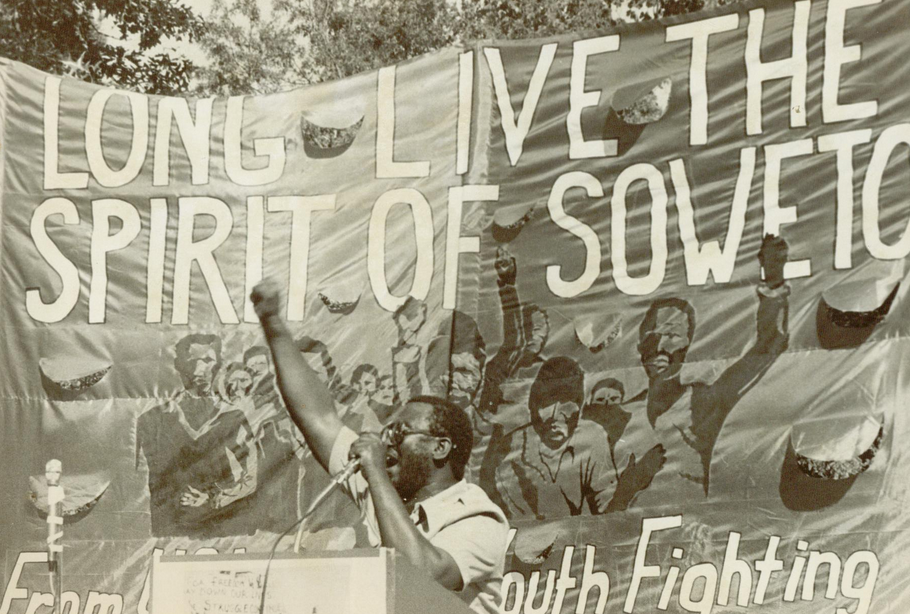
Molefi Ndlovu argues that the de-mobilisation of old formations has created new oppression for activists.
In this article we will consider the usefulness of applying the concept of peoples’ education as an analytical tool by which we can assess the organising efforts emerging social movements. It will also consider how mutations in the related concepts of “organs of peoples power” may have contributed to the de-mobilising genuine instances of self-organisation and direct democracy. This is done in the backdrop of increased organisational responses to the impact and effects of neo-liberalism on marginalised communities.
There has been plenty material documenting the history of the broader South African liberation movement. Most of the progressive narratives agree that the dawn of the 1980s marked a qualitative shift in the nature of the political crisis, the birth of the civic movement, the United Democratic Front( UDF). This signified heightened community self-organisation and a more systematic effort at building collective responses which emphasised on organisational culture.
This shift, as many analysts suggest, comes about through the intensification of struggles in the union movement since the Durban strikes of 1973 and the blazing militancy of youths in the aftermath of 1976. The change in the very nature of the understanding of the demand for political power, began to build a critique of the nature of apartheid capitalist power.
This school of thinking was strongly influenced by the emergence and growth of the black consciousness movement. It largely redrew areas of struggle culture and social reproduction. The flows of such radical re-evaluations were absorbed with gusto by a generation of youths anxious for radical social change. They began in earnest to build other ways of being – those not determined by the priorities of apartheid capitalist exploitation nor by the repressive apparatus of the state.
Whilst organisations such as the UDF were important for this process, by and large the voluntary projects were spontaneously driven from the grass roots often catching many local UDF branches ill prepared.
The crisis peaked in the mid 1980s (1985-1987) with a massive boycott of schooling by many youths optimistic about the imminent collapse of the apartheid regime – the moves towards un- governability as it is popularly described.
The discourse of organs of peoples’ power (and by extension peoples’ education for peoples’ power) was a reflection of radical direct alternatives to constitutionality.
Our contention is that the process of de- mobilisation allowed for the discourse of constitutional democracy to happen above the heads of the majority the negotiated settlement of Kempton Park- the CODESA compromise – could not have been possible if the notions of dispersed democracy were continued.
The emerging social movements have demonstrated, through their experiences that self-organisation of learners and students has found its voice not through the institutionalised “organs of peoples power” of yesteryear, but rather as a result of the convergence of social crisis faced by communities with a toothless civic movement, a student representative structure whose main occupation is finding favour with university administration and a learner formation that has been beaten down to meek silence. The department of education can legislate the spaces through which learner voices can be raised.
In 2005, 29 years since that fiery June day, we see the impacts of the neo-liberalist State on poor communities – a 17 year old from the Free State, who was out of school and unemployed was murdered by the Mbeki regime for demanding basic services. The objective de-mobilisation, which began by notions of a national alternative, has paved the way for a new form of oppression, one which situates itself with the goals of global capital.
Molefi Ndlovu is a member of the APF education sub-committee and an activist in the social movements
Leave a Reply
You must be logged in to post a comment.