
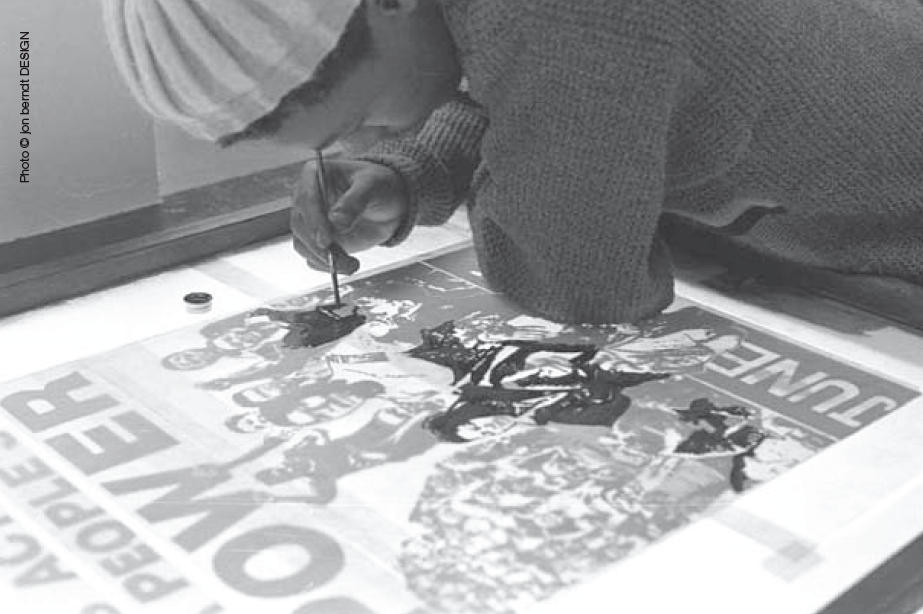
Towards the end of last year at the Education Rights Project’s national education camp, I had the honour of being amongst about a hundred enthusiastic young people. This was part of a programme following the successful June 16 commemorative march in Soweto of the ERP and social movements, which attracted close to 5000 overwhelmingly young people, and the political economy of education workshops also attended by close to a hundred young people. The average age of participants in both the political economy course and the youth camp was 14 years.
Close to thirty years ago I was part of a gathering similar in terms of size and the age of participants. This was the official launch of the southern Transvaal region of the African Students Movement (SASM). It was held at Wilgespruit outside of Roodepoort. Many present at the SASM meeting ended in prison, exile or on the run. SASM initiated the formation of the Soweto Students Representative Council (SSRC), which organised the march on the 16th of June 1976 leading to the Soweto uprising. There are many today who claim that their political organisation was the force behind the uprising. The simple truth is that many of us were brought to Wigelspruit by our older siblings or neighbours already involved in the university-based South African Students Organisation (SASO). Discussions amongst us focused on the daily humiliations experienced by us and our parents under apartheid, the need for free and equal education, strengths and weaknesses of various South African liberation movements, and the civil rights movement in the United States. A few young people talked vaguely about the struggle of the Vietnamese against US imperialism, Che Guevara and anti-capitalism. We certainly had no idea that our humble meeting would be the precursor of the momentous events of June 76. Nor did we have the clarity of thought displayed today by some youth at the ERP events around the impact of neo-liberal capitalism on education. What counted for us was courage, determination and disciplined action in the face of seemingly overwhelming odds and the apparent passivity of our parents to apartheid rule.
The story of June 16
In 1975 the Minister of Bantu Education issued a directive to schools that half the subjects in standard 5 and form 1 must be taught in the medium of Afrikaans. Dissent spread from school to school. On the 13th of June SASM held a mass rally in Soweto. An action committee was formed which became the SSRC. On the 16th June 1976, 20 000 people marched through Soweto. The police opened fire and the first victim, Hector Petersen, died. The Soweto uprising had begun, students responded by torching symbols of apartheid and economic exploitation such as municipal offices, beer halls, a bank and liquor stores. Within days the uprising spread from Soweto and surrounding Black townships such as Eldorado Park to Pretoria and as far as Nelspruit, Galeshewe, Langa, Nyanga and the universities of Turfloop and Ngoye. By August the so-called ‘Coloured’ areas of the Cape Flats and most homelands were involved. By 1978 the uprising finally settled. The toll in human life was high. It is estimated that at least 1000 young people were killed in this period; tens of thousands arrested and thousands fled into exile.
In 1977, the South African Students Organisation leader Steve Biko was killed in detention and all Black consciousness organisations including the SSRC were banned. Despite the suffering, the uprising isolated collaborators, homeland leaders and closed down the puppet Urban Bantu Councils; communities embarked on many stay-at-home campaigns and blocked a rise in rents. The uprising also provided the exiled liberation movements thousands of cadres at a time when for example the ANC had just a few hundred people in camps and revitalised the international anti-apartheid solidarity campaign. Most importantly, the uprising presaged a new era of resistance.
The causes of the ’76 uprising
Many people superficially claim that the uprising was a race riot sparked off by the introduction of Afrikaans as a medium of instruction in schools. This is too simplistic and does not situate the uprising in the context of the times. The causes of the uprising are manifold. These include:
- The crisis in schooling. There was overcrowding and a high student-teacher ratio. Buildingand equipment were either absent or of poor quality. Teachers were not properly trained and corporal punishment was used extensively. Student Representative Councils were outlawed. School inspectors continually harassed some progressive teachers and principals. In this already difficult situation came the introduction of Afrikaans as a medium.
- The economic recession. Unemployment rose, inflation was high and the food prices soared. The poverty datum for Soweto was estimated at R129 per month; but the average Black family was earning R75 per month. Matriculants faced poor employment opportunities.
- Apartheid policies. Constant and humiliating ‘dompass’ raids and arrests, compulsory homeland citizenship as well as unequal facilities in housing, transport and recreation contributed to grievances.
- The ‘atmosphere of revolt’ in the 70s. This was brought about by the liberation struggles in Mozambique, Angola, Zimbabwe and Namibia. The workers strikes of the early 70s also played an important role and of course, the ideas of Black Consciousness and its organisations.
Students and workers
While the uprising started as a student protest attempts were made to also include workers. Initially, students were preoccupied with preventing workers from going to work instead of discussing joint grievances and understanding the worker ’s plight. Mistakes were made such as stoning busses carrying workers to their jobs. At the beginning of August ’76 though, students relatively successfully appealed to their parents and workers to stay away from work and march to John Vorster Square where many student leaders were being held and tortured. Altogether there were four stay-away (azikhwelwa) calls. It must be said that students did not forge links with the working class. People who responded to the azikhwelwa calls responded as parents and township dwellers concerned about the repression against children and not as members of the working class. Also the horrible rampage of migrant workers from Mzimhlophe hostel backed by police against students and their parents should be remembered.
The next wave of student resistance the 1980 boycotts seems to have understood the need to link student demands with the wider society. Two statements from student leaders from the 1980 express this:
“We must see how short-term demands are linked up with the political and economic system of this country. We must see how the fail-pass rates in schooling are linked up with the labour supply of the capitalist system”.
“Our parents, the workers, are strong, they have power. We, the students, cannot shake the government in the same way. We have got to link up our struggle with the struggle of the Black workers. Our parents have got to understand that we will not be ‘educated’ or ‘trained’ to become slaves in apartheid-capitalist society. Together with our parents we must try to work on a new future. A future where there will be no racism or exploitation, no apartheid, no inequality of class or sex”.
Many of the young people who attended the ERP political economy course and youth camp realise that resistance in schools reflects issues in the wider society. And it is these wider issues that must be changed. Reforms in education alone will not bring about equality, as long South Africa remains a capitalist society. To get equality we need fundamental social change.
Today, ten years after the first democratic elections and twenty-eight years after the ’76 uprising the context is different. On paper we have equal education and the elimination of a race- based education system. Yet, we continue to be a capitalist society, which inevitably reproduces both class, and race inequality in education. User-fees, education feeder zones, language and marketisation of are some of the ways in which class and race inequalities are being reproduced in education. The new wave of student activism holds the key to free, equal and quality education for all and not the careerism of the ANC Youth League. It is those young people who stand with parents and workers, unemployed and poor found in social movements that will re-open the doors of learning and culture.
Salim Vally works for the Education Rights Project and is active in a number of social movements.
Leave a Reply
You must be logged in to post a comment.