
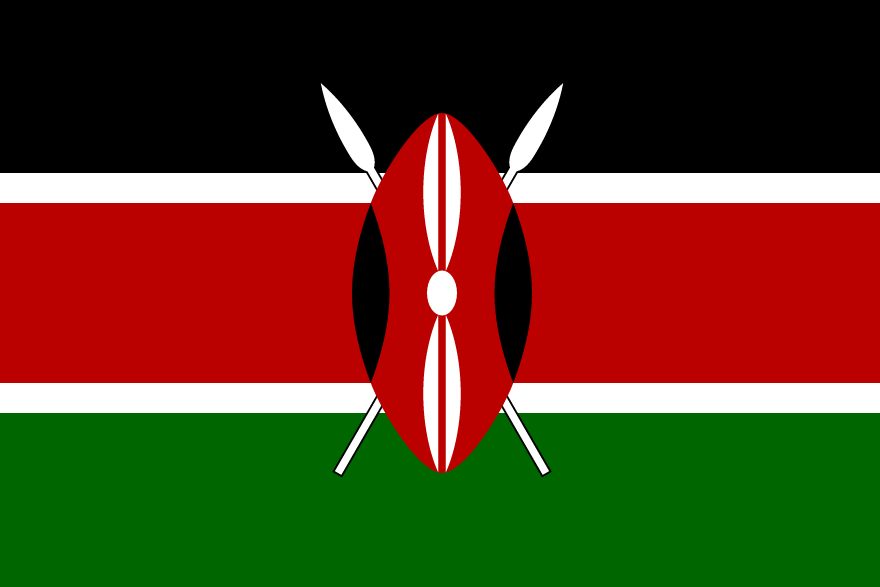
KAARA: My name is Wahu Kaara from Kenya. I work for a campaign that is advocating for debt cancellation, called Kenya Debt Relief Network, which has a membership, made up of NGO’s, Religious Organisations and individuals who are committed to economic, environmental and social justice.
INDYM: So can you tell us about the struggles you are facing in Kenya?
KAARA: The struggles in Kenya have been long because it is a struggle that has continued since the time the British conquered our country. The question of fighting for freedom has continued and I can talk a lot about what is happening, because I have been participating in it.
Much of our struggle had been around the issue of good governance, human rights and economic justice particularly the question of political and civil rights. That is what most people had been fighting for, because after the Mau Mau war in the 50’s the independent government that took over betrayed everything that the Mau Mau was fighting for.
The Mau Mau was fighting for land and freedom, but the independent government came up with the willing buyer-willing seller notion on the question of land. So it meant that only those who benefited from the Colonial government, who had money and who had some education, so to speak, and could be employable, could be able to buy the land.
So the majority of the peasants and the workers who had fought in the Mau Mau were dispossessed. And the land question has continued to be a huge question in Kenya up to today. Beside that, because of the way the people had sought, the independent government continued to infringe on the rights of the people by becoming very repressive. Although our constitution allowed people the freedom of expression, government used state machinery to reduce those rights and to even curtail them in total.
As a result by the 1980s, Kenya was almost a Police State. People who were still going on with the struggle had to go into exile. Others went to prison and others were detained. And the struggle continued to be intensified.
By the 1990s, the Kenyans said enough is enough, and people fought for political rights. They managed to have the constitution reviewed. The section 2(a) that was repressing people was repealed, and a multi party system was embraced. By last year we were able to vote out the Dictator, President Moi. The Kenyans showed that, politically, we have become mature.
As citizens, we have come to claim our respective rights, to be able to participate in our political processes and to influence our destiny. And last year ’s elections showed that Kenyans are ready to do things for themselves. Notwithstanding that it has been with a lot of sacrifices, even to remove Moi from power. A lot of sacrifices have been made. We fought for the constitutional review process and up to this particular time, we are still discussing the new constitutional document.
INDYM: So what do you think about the Winter School?
KAARA: The Winter School is a brilliant idea and that is why I had come myself, to learn more about it. The name of the college itself means ‘light for knowledge’ and for liberation. It is what African countries, and, in particular, Kenya requires. Because many people want to fight, many people want to understand. It is an advantage for society. And many people, especially the young people, don’t understand the dialectical questions that are in existence. Why oppression, who is oppressing? And what can be done about oppression? And how can people engage with it?
I am trying to say that many people don’t understand the ideological conflicts that are there. And like I have seen in the situation, the repression scattered all the progressive forces. And even the progressive ideas. And the education system has also interfered, to the point that we no longer have critical thinkers and creative thinkers.
So the Khanya College Winter School is a great experience where you can find people coming to think and to chart a way forward for assistance. Or to chart a way forward for participating and in making the world a better world.
INDYM: So do you think that the people who are here and their experiences are similar to those of yours? According to your view what is the way forward? What must be done, since we share some experiences?
KAARA: What must be done is to be able to come up with a concrete identity of who we are as agents of change. We must declare we are there and we must have a program of action for what we are engaging with. It can be done by the strengths of different countries, the struggles they have gone through. So that we create blocks and are able to make a stronger platform, a stronger voice, to demand what we have been denied for many years. And I think that is what I am hearing each and every participant try to say.
Nonetheless, in a way we are not any different from those who exploit and oppress us. They are also organising themselves. That’s why we have the African Union. That is why we have NEPAD as a program for Africa. To spearhead the forces that exploit us.
So we need to organise ourselves. We need to make our fighting platform known to those who are looking for a platform, to be able to link up with others. For popular Social Movements that are going to be able to engage, who are at the forefront of the struggle for change. Who are working against one enemy, the enemy that wants to exploit the whole world, in demanding and declaring that the resources of the world belong to them because they have the might of capital and they have the might of arms.
INDYM: Do you see such initiatives like Winter School happening in Kenya?
KAARA: It has to happen because the struggle in Kenya is demanding that we have patriotic, ideologically clear, good agents of change. So a Winter School is just going to be a catalyst because it is encouraging. I have learnt that these things can happen. That is what we need in Kenya, although we are not calling ourselves a Winter School. But we also need to meet and try to dialogue, and try to find our way forward.
So the Winter School has inspired me to see that we can consolidate what is there and here and in Kenya and make it a program like we have a program of Winter School. This can link up with a Winter School in South Africa. Or a Winter School elsewhere. And for that, Africa is going to have a new face and a new way forward. And people can realise that they are not just fighting alone, but they are fighting together with the others.
INDYM:Thank you
Leave a Reply
You must be logged in to post a comment.