
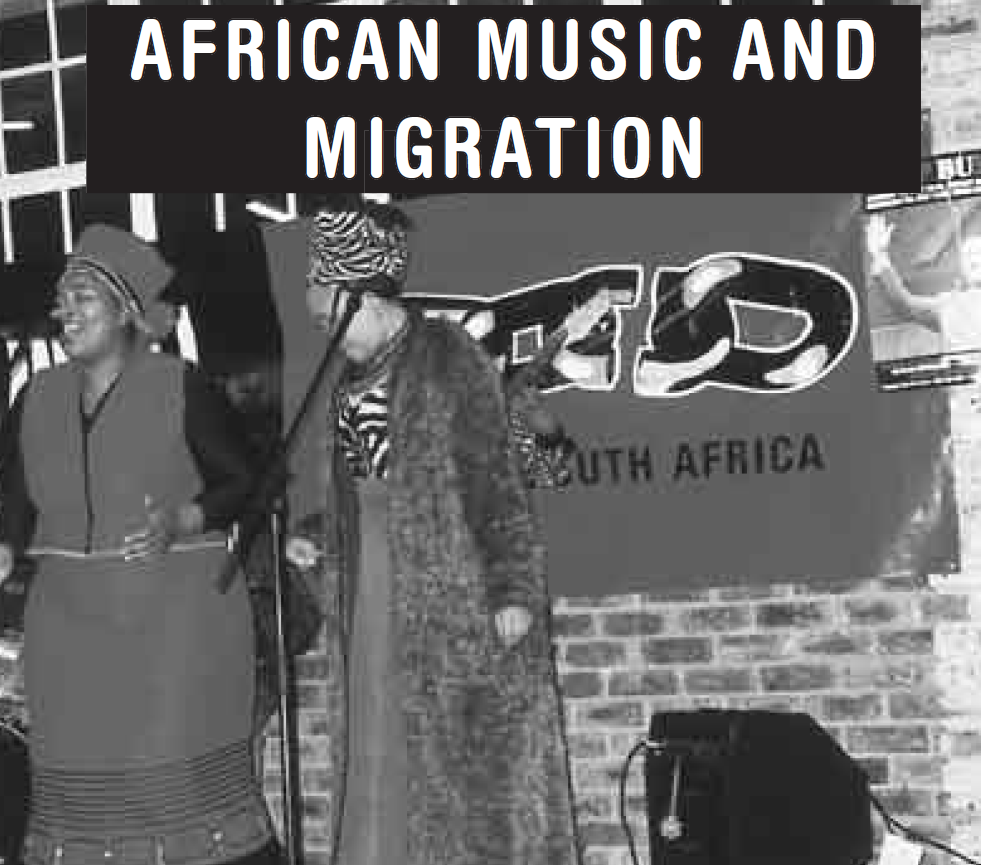
Richard Nwamba* takes a look at the relationship between music and migration in the African context, and argues that music form part of the struggle for a better life
Making music for an African is not something that is done for leisure or fun. Music is a way of life to an African. There is music for when a child is born. There is music for naming a child. As the child grows and reaches puberty, there is music to celebrate that event. Of course, as an African becomes an adult and he gets married there is music for that. And finally, the African dies, still those left behind make music to celebrate the African’s life and mourn his death. While an African does not live to make music, he makes music to live. To an African life without music would be unbearable and even unliveable. So, it follows that wherever an African goes he will take along his music.
As the so-called First World “discovered”
Africa and found that the African is strong and can make a very good labourer for the sugar, cotton, banana and tobacco plantations in the America’s, the African was forcefully and brutal captured and transported for many days to foreign lands. The African had to make music to survive that long and tragic journey. As the African reached foreign shores and had to endure the abuse and humiliation of his captivity, the African had to make music – solemn music to evoke the spirits of his ‘ancestors’ to come to his rescue.
And, when left to his own devices, the African made music to celebrate. Celebrate what, you might ask. Being alive! Just surviving that unwanted journey was worth celebrating. The African’s new circumstances may have been depressing and inhumane, but he bore it with music. The music healed the African!
The African left behind on the continent was not safe too. The desire to dominate him grew to such an extent that by 1884, only two countries in Africa were free from foreign rule – Liberia and Ethiopia. The African bore this foreign rule with music. When the time came for the African to stand up and resist the occupation, subjugation and domination. Yes, when the time came for the African to fight for his very survival, he used music. The very struggle for the African’s complete independence, both in Africa and some parts of the Americas, was fuelled by music. When liberation finally came and the African’s dignity was restored, it was celebrated with music. As the African proudly took his place amongst the nations of the world, he celebrated with music.
But, alas, an African, just like everybody else, is a human being: imperfect and prone to bouts of greed, self-aggrandisement, misrule, corruption and other human follies. That state of affairs too was lamented with music.
Some African leaders know the importance of music to their subjects. The ruling class in West Africa surrounded and still surrounds itself with a griot caste or hereditary troubadours. The function of this griot caste was and is still to sing the praises of the ruling classes. As the new African master started to mess up, the griot made music to sweeten it up. Music made the pain of suffering under the hand of fellow-Africans more palatable.
But finally, the African could not take it more. He needed to get away from his fellow African dictator and seek livelihood elsewhere. So the migration started.
Of course, this migration did not start in the last century. The African has been moving up and down this big continent – unhindered – for millennia. The
Fulani or Toucouleur as they are called in Senegal are amongst the biggest nomadic tribes in West Africa. The Touregs know no borders. They straddle the borders of Mauritania, Mali, Algeria… without even being aware. The borders mean nothing to them.
These are some of the Africans who have made it a virtue out of not being able to settle in one place. Sometimes this migration came about as a result of geography – The African simply ran out of grazing land or water for his flocks. So, he needed to move on to greener pastures, so to speak. Sometimes the land provided good pastures and water, but his fellow African threatened him. So, he had to flee for his life. But, even as he fled, he made music. Yes, to bemoan his unfortunate status, he made music. And then he settled in other parts on this big continent, still unhindered, as there were no borders as they are today. But even after 1884, when Africa was already parcelled out amongst European nations, the African continued to migrate and make music. The new borders could only slow him down but could not prevent him from migrating.
Why does the African do this? Why doesn’t he settle down in one place and stay put? The answers are simple and straightforward. One just has to look at this country to find the answers. Why are there so many people of different races and colours here in South Africa? Where do they come from? More importantly, what do they want? Again the answers are simple: they came from all over the world and they want the same thing that the African wants – a stable life. You see, the African, despite his penchant for making music all the time and everywhere, wants the same things that everybody else wants a good life for himself and his family.
The modern means of travel has made his migration even faster and longer. Yes, the African even finds himself outside his native continent this time voluntarily! But wherever the African finds himself, he has to make music to live!
* Richard Nwamba is a musician and an actor and hosts a programme on African music on the radio station Safm on Saturdays.
Leave a Reply
You must be logged in to post a comment.