
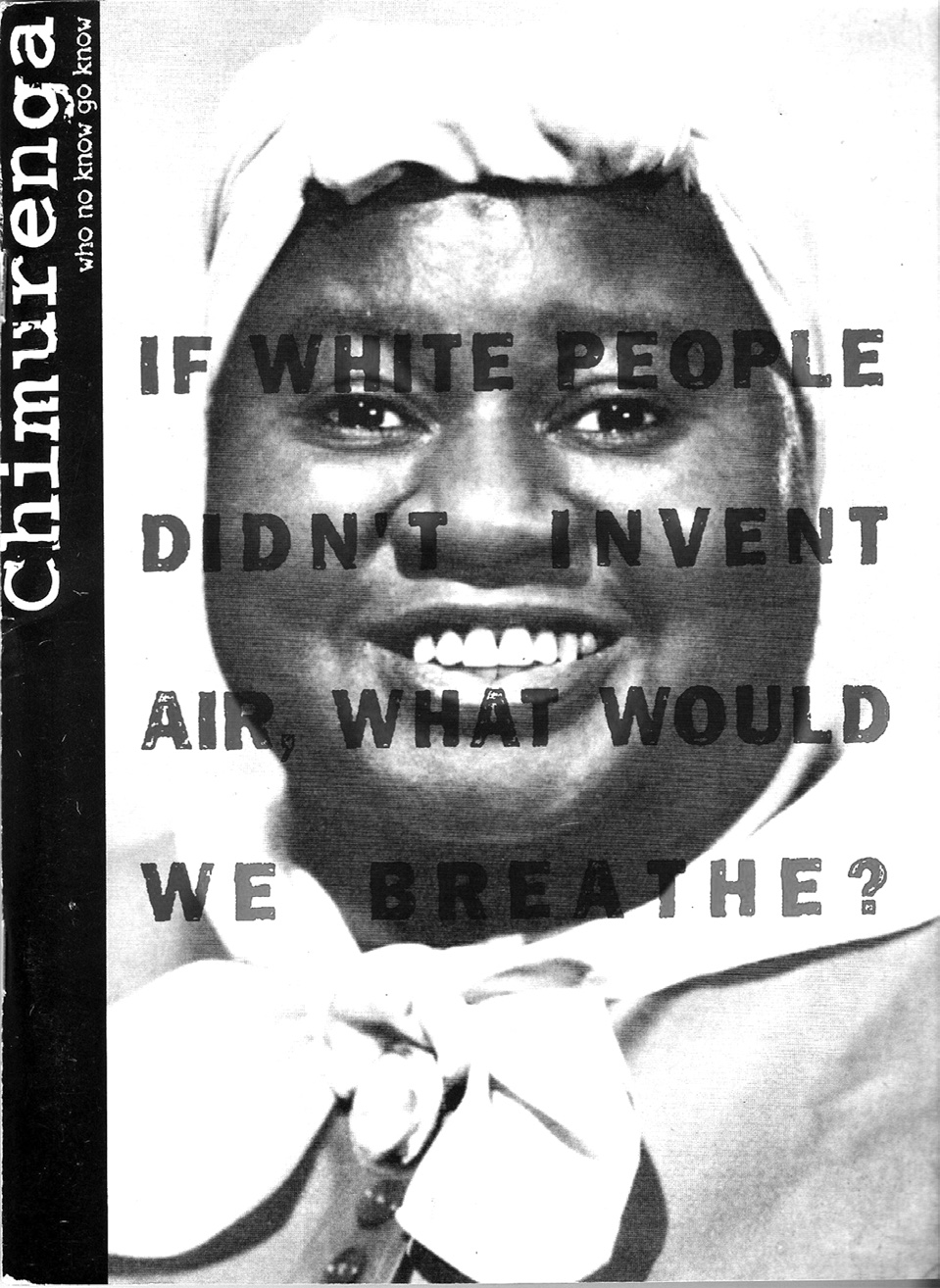
Makhosazana Hlatswayo* discusses the different initiatives by small progressive publishers to promote a culture of reading and writing that includes creative methods of accessing children, youth and adults.
When one looks at the current state of literature being published, one wonders why most of it is not relevant to issues that affect a large protion of society. It has become obvious that the main historical aims and objectives of publishing – to actively educate and enlighten the masses – has disappeared from the agenda of mainstream publishers as well as of writers in Southern Africa. Contrary to prevalent beliefs about writing and publishing in South Africa such as“the people of South Africa don’t read”, there are a lot of initiatives by small progressive publishers to promote reading and writing and combining the different mediums of literature. I will mention only a handful of them.
Kotaz – is a quarterly literary and art magazine published by Mxolisi Nyezwa in New Brighton township, Port Elizabeth. Kotaz is currently working on a form of housing book distribution centres in containers in townships. The first container has already been placed at NU9 extension in Motherwell township, Port Elizabeth. The centre is named ecaleni. com, and provides the services of an internet shop, public phones, editing & translation services, printing & photocopying, book displays & sales as well as computer classes (charged at R20 for one day’s training).
It’s future plan is to increase the popularity of the centre by targeting the youth – including young writers & artists – to see the centre as a one-stop shop for printing & book related services, as well as to establish five more centres in Kwazakhele, Veeplaas, KwaNoxolo, Kamvelihle & Dwesi extension townships in PE which will also cater as book distribution and internet & printing services points for the surrounding township areas of PE.
Timbila Poetry Project – is a registered non-profit organisation based in the Polokwane Municipality. It was formed in 1999 by the poet and cultural activist, Vonani Bila. The project aims develop, nurture and publish South African literature and music by emerging black writers and musicians. It promotes multilingualism, a culture of reading and music appreciation.
Timbila aims to record creative poets, musical talents and writers and to draw on the country’s largely untapped oral tradition in communities. It published works by 60 poets in an annual publication, and in occasional smaller volumes. Timbila brings together the work of largely unknown and unsupported poets and musician.
These creative voices come from the urban township and the rural scene. Townships are the large urban locations where people were forced to live under apartheid as ‘black’, ‘coloured’ or ‘Indian’. The townships still have much of their character and appearance of the apartheid era. The segregation of the past has only been eroded in some middle class suburban settings.
The rural areas are home to the majority of the black population, who experienced the brunt of the problems caused by colonial segregation and later apartheid are evident, in particular land dispossession, evictions, mass poverty and unemployment. The rural areas and village communities are strongly rooted in the older African linguistic and oral traditions and poetic musical expressions.
South African poetry and undiluted traditional music provides a detailed and multifaceted view of the society, both in terms of how it has been experienced over generations but also, and more pressingly, concerning the fraught transition and massive changes that have taken place since 1994 and the beginning of democracy.
Keleketla library –The Keleketla! initative is a collection of projects to create stories through a variety of modes and media. This is based on a dynamic
and fluid interaction between audience and story- teller – through the spoken word, music, art, film, performance, writing, reading and so on. Located at the Drill Hall, a redeveloped heritage site in the Joubert Park area of the inner city, the projects involve the active participation of local people from a range of age groups.
Keleketla is a youth-led arts and media collective that uses action and dialogue to create a vibrant and positive community. They have a mobile library that visits the inner city getting children to read extracts from books and then to write what they have read or understood. They are currently working on a Book to be project which is a writing workshop where children write about anything that comes to mind and is of interest to them. Each story is individually edited together with the children’s input, and book covers are designed.
Reunited Siblings – is an independent publisher dedicated to making reading more socially acceptable by engaging the youth and adults in specific communities. They use products that today’s youth can relate to like cell phones and the internet, but without straying too far from the book. They are also developing relationships with schools and other institutions where books may not be readily available by creating awareness about publishing and distribution, and they run writing skills workshops. They also focus on voice projection workshops.
Reunited Siblings published their first poetry collection in 2005, and the majority of the poems were sourced from the streets of Johannesburg. They have recently published another collection of poems from Laurelle Helena titled Unfinished Conversations.
The siblings are currently working on a DVD project on contemporary Jozi culture titled Slam in the city which taps into the alternative literature mediums of promoting words. They work ten slam poets creating awareness through poetry.
Afrika Writers Forum (AWF) – AWF was founded as a platform for writers and readers at Khanya College Resource Centre in May 2009. The Forum started with informal meetings of writers and artists from Zimbabwe, Congo, Kenya, Nigeria and South Africa at the library in the sixth floor of the House of Movement, 123 Pritchard Street in Johannesburg. The Forum is a platform where writers can discuss and proliferate their skills in the art of writing and find ways how to publish their texts. The writers meet on Wednesdays and Fridays from 14–16h in the library of the House of Movements, discussing various issues concerning writing, editing and publishing their writings.
The AWF adopted the concept of Guerrilla Publishing as a means to empower the writers to deal with the lack of funding for publications in South Africa, and to find ways to self-publish. The basic demand“I publish what I like”is put into action by the Forum’s basic principles of reciprocity and solidarity. A publishing fund has been established which allows for the publication and promotion of members’ writing, even if they do not have any financial means.
The Forum has launched a number of projects which aim to convey the importance of reading and writing to the youth and the need to fight against xenophobia, to promote gender equality and social justice.
Conclusion
With all the energy and determination with which these various projects and collectives are working to develop and promote a strong and vibrant culture of reading in South Africa, we look forward to interesting times in the near future for the South African literature scene.
Leave a Reply
You must be logged in to post a comment.