
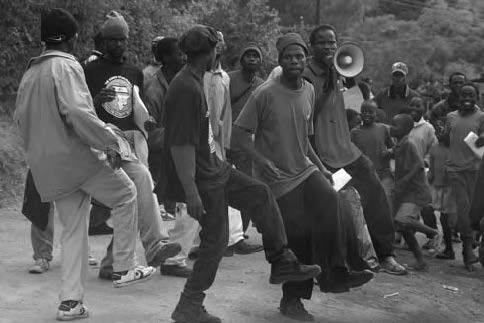
Molefi Pilane reflects on the regional Social Forum, focusing on some of the key discussions and outcomes
Introduction
The 2008 leg of the Southern Africa Social Forum was held in Manzini, Swaziland on the 16th to 18th of October 2008. The Southern Africa Social Forum is a platform and an open space for regional social movements and civil society organizations to meet and critically debate issues that affect development in the region. It is organized along the principles of the World Social Forum and the Africa Social Forum. This is a space for democratic debate, exchange of experiences and strategizing for effective action by groups and movements opposed to neo-liberalism and committed to building an alternative society.
Gender and Women
The debates in this workshop were based mostly on experiences from different countries with most of the speakers emphasizing the need to struggle for gender equality including equal opportunities.
The workshop also learnt of the most brutal form of cultural practice in Swaziland that encouraged discrimination against women, resulting in the increase in physical violence against women and girls, including the practice of forced marriages, rapes, assault and abuse.
The workshop also dealt with the issue of the Feminisation of Poverty in the region evidenced by amongst others the following factors:
- Women have a higher incidence of poverty than men
- That their poverty is more severe than that expe- rienced by men
- That the poverty among women is strongly as- sociated with increases in the number of female headed households
The delegates called on the need for: positive changes in gender relations and more respectful social attitudes towards women; more decision- making and political participation by women at all levels of society; ending violence against women; improved communication and mutual support between men and women on family planning , HIV and other sexually transmitted infections; increase in the numbers of girls at schools and support up to tertiary educational institutions.
Food security and Land
The Social Forum took place during the time when the world was witnessing an increase in the price of crude oil which also resulted in the increase in food prices on the Global scale. The participants in this workshop alluded to the fact that apart from the increase in the oil prices one of the main reasons for increase in food prices is the unfair and unbalanced international trade between the rich countries of the North and the poor developing countries of the South. The WTO was mentioned as being at the centre of this unfair and unbalanced International Trade as it is seen by activists from the region as imposing rules that favour the rich countries at the expense of the poor developing countries. This is supported by the following facts:
- The World Trade Organisation (WTO)
Although established in 1995, the WTO has its roots in the Bretton Woods negotiations of 1945.
The following are some of the examples of unfair trade pointed out in the workshop: the EU subsidy system that is depriving tens of thousands of Southern African farmers of their livelihoods by dumping subsidized produce in the region and thus throwing many farmers out of business and threatening regional food security; while chicken producers in Europe do not receive direct subsidies, the grain that feeds the birds (chickens) is subsidized, substantially reducing their costs of farming; sugar trade- farmers in Europe are guaranteed a price for their sugar that is three times higher than the world price; Mozambique loses more than 70million pounds a year due to restrictions on exporting to Europe; and 12 000 workers in Swaziland have lost their jobs because the local sugar industry cannot compete.
Global Warming and climate change
This workshop took as its starting points the struggles around the environment and the different global summits and international conferences on sustainable development and the protection of the environment. The workshop called for a need to struggle for the realization of the goals set in some of the agreements reached in such summits and conferences. Some of these agreements include the Rio declaration; Agenda 21, UN framework convention on climate change; and a Convention on Biological Diversity.
The workshop also shared experiences of struggles around environmental issues with the following areas in focus: struggles against mostly gold mining companies that pollute the land around Johannesburg; struggles against pollution in Platinum mines of Rustenburg and Limpopo mining towns; struggles against air, land and water pollution by Shell and Engen in the Durban South area.
There was also a call to struggle and force governments in the region to become signatories of all the UN Conventions of the protection of the environment especially the Kyoto Protocol and others and make a call for developed countries to do the same.
Youth
The problems raised in this workshop ranged from: poverty, high levels of teenage pregnancies, lack of opportunities like decent jobs, further education assistance in the form of scholarships and bursaries, lack of recreational facilities ( e.g. sports facilities, libraries) , the effects of HIV/Aids.
Education and development
In terms of the debates that took place, it was clear that provision of education and educational facilities was central to the concerns of the majority of the youth at the Forum. The value of education was emphasized, that education can help develop common values among people, such as respect and care for others and ourselves (e.g. spirit of solidarity and unity needed to counter incidents like xenophobic attacks that took place in South Africa); that education is also crucial in equipping people with essential skills and competencies for an active role in society and in the economy.
High levels of HIV/Aids prevalence
Various reasons were debated and discussed regarding why Southern Africa has one of the highest infections and transmissions of the disease. These included High levels of poverty; The high mobility of specific social groups:-( refugees, truck drivers migrant workers, informal traders, security personnel); Socio-cultural beliefs and practices; Stigma: –( leading to discrimination, denial and blaming. This results in people not accessing or delaying remedial actions such as diagnosis and/or treatment) ; Information, education and communication; Gender issues: (that tolerate and perpetuate male dominance and disempower women in sexual decision-making and puts both men and women at risk); Prison conditions; etc
There were also suggestions that the youth must ensure that they make their presence and voices heard at all spheres of their societies. That they should actively participate in all Social Forums, including Regional Social Forum, African Social Forum and World Social Forum. There was also a call for the Youth to form their own linkages and networks across countries and social movements in the region in order to support each others’ struggles, especially the struggles for freedom, democracy and multi-partyism in Zimbabwe and Swaziland which needs urgent attention and assistance.
Developing Alternatives to neo- Liberalism
This workshop was hosted and facilitated by a research group known as Alternatives for Neo- Liberalism in Southern Africa (ANSA). The discussions in the workshop were based on a document titled: ‘Beyond ESAP: Framework for an Alternative Development Strategy in Zimbabwe’.
A number of calls emanated from the discussions. Firstly, there was a call for the need to develop alternatives to neoliberal policies at all levels. Secondly, that such alternatives should be both national and region wide. Thirdly, such alternatives should be based on a central role of the state so that it can become developmental. Fourthly, all countries in the region should move towards dynamic, participatory and radical democracies. Fifthly, all countries in the region should unite around alternatives to neoliberal policies. And lastly, that the region learn from and monitor developments in Latin America, especially Venezuela.
Conclusion
The conference closed with the following calls: The conference resolved that the 2009 SASF will be held in and hosted by Lesotho.
Leave a Reply
You must be logged in to post a comment.