
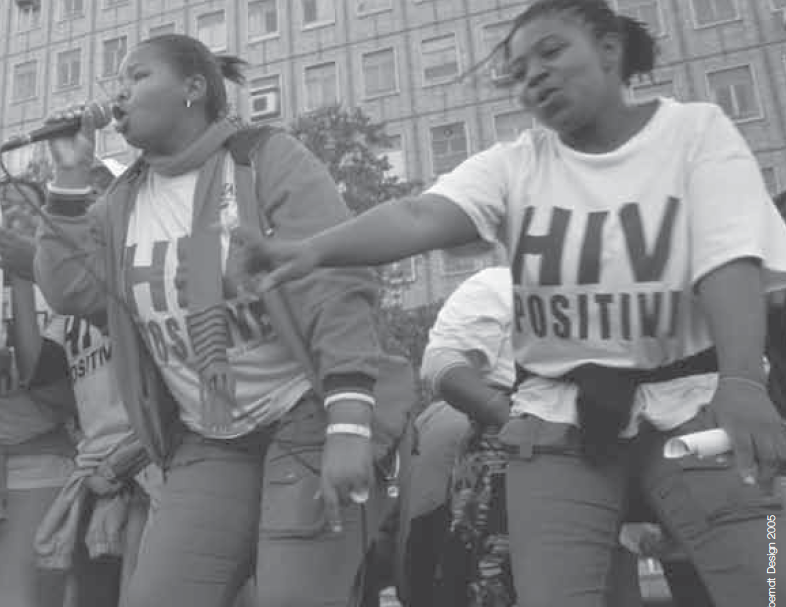
Fazeela Fayers calls on women to reflect on the sacrifices they make as volunteers in the health sector as this only reproduces government and private sector complacency.
Ironies are more easily noticed when one looks at the outside, yet it is on the inside that we will find the solutions to reverse our hypocrisy. As women let us not forget to reflect on the sacrifices we make for progress, which sometimes results in regression.
The thoughts below will hopefully raise some introspection on the role of women’s martyrdom and voluntarism. This will be useful in empowering a collective response from women to continue the toil in the HIV/Aids sector, and at the same time demand greater respect for their role and worth as women. Women do, after all, have the rights to equality enshrined in our legislation. We should organise and embrace those rights with firm conviction.
Voluntarism –the ultimate subsidy to government and profiteers
More than 17,000 women, who are on the register of the Department of Social Development, are rendering home-based care. The work of these women takes place under extremely difficult conditions. The overwhelming HIV/Aids crisis has demonstrated the incapacity of the public health system. It seems that people will have to wait for supportive health-care services in another lifetime, especially given the slow rate of Anti-Retroviral (ARV) roll out.
Many school leavers are exchanging the disillusionment of unemployment for voluntarism in the field of home-based care. The carers are predominantly women who provide selfless care for those infected with HIV/Aids. The exact value and contribution of these registered home- based care workers, as well as the thousands who work through the various non-governmental organisations aligned with other departments such as those in the Public Works Programmes in easing the burden of home-based care on the public health system, is yet to be measured.
As a trade unionist, my concern extends beyond the obvious: the remuneration of these workers whose labour is provided either without any pay or they are paid stipends of between R500 – R1000 per month. I am deeply concerned about the lack of respect that is systemically inflicted upon the volunteers as far as their health & safety is concerned. Sadly, such toiling efforts of labour can be seen as a lifelong subsidy to the government for which very little respect is afforded in return.
A further crisis is developing amongst health employers who have unilaterally decided that nurse trainees will personify Florence Nightingale, and no longer get remuneration while training as they did in the past. So professional nurses who are in training and require practical training of 30 hours per week, have been forced to join the volunteer list for the work undertaken as part of their clinical training hours. That is, unless they are the lucky few who have secured payment for these hours as registered learners of the HWSETA.
It is difficult to address this unfair practice because the current legislation provides no protection. It is when we look deeper into the fields of women’s work that we discover the re-emergence of archaic inequalities. In the past we knew that where the law compromised our dignity, we needed to organise, to lobby and to protest. Today this is canvassed with great difficulty, especially amongst the ever self-sacrificing women.
No compensation if injured at work
The Basic Conditions of Employment Act describes a worker as someone who receives remuneration. Therefore many workers who receive honorariums, stipends or no pay at all are excluded from the compensation paid by the Occupational Injuries and Diseases Act. This effectively means that when one is possibly exposed to the blood of the HIV infected person that one cares for, and becomes infected by the virus, there is no system for compensation in this regard. The legislation is currently under review and as a trade union HOSPERSA has made submissions to include the volunteer.
Effectively, all mothers sending their daughters to the critically necessary field of nursing, do so at their own high risk. As long as trainee nurses are not paid for their regulatory 30 hours of practical service a week, the private health board of directors profiteer from their free labour. In addition, this compromises their right to dignity and compensation should they contract HIV or any other disease whilst at the workplace. In a country-bled dry of professional nurses, we are complacent with the supportive nursing care that exists. How dare we accept this, or should we just accept this because we are women?
The health sector and the registered NGOs rely on home-based care, child and youth care workers, workers caring for the aged and those in residential facilities. These workers are paid unacceptable salaries, and occupational health and safety measures are almost non-existent. As workers strive towards the care of those most vulnerable in society, they do so at the price of their own safety as workers, and those who are in their legitimate safe keeping.
Female fields of work have less protection
Whilst the mining sector recognises the disaster of the danger of the mines by a special Mining Health
& Safety Act, even a gradual inclination or utterance of the legislation towards safer work environments for women’s ‘fields of work’ would be a victory. Even more victorious would be the interest of women in understanding their occupational health & safety rights, an issue as important as remuneration.
The current regulations for compensation of occupational exposure to HIV are being reviewed. We wait with abated breath to see if the exposure to or the contraction of HIV at the workplace will be compensated for volunteers, students and fully paid workers as they relentlessly provide their services.
Assessment of the extent of voluntarism
As a fulltime volunteer in an unpaid job, or a partial volunteer in an underpaid job, the risks of contracting HIV/Aids remain a pressing issue. Sadly, the priceless role of the volunteer, (in their silent acceptance as martyr and subsidiser of government and profiteers in the health sector), may cost the person their family and the country a valuable skill, service and contribution in the long term.
If we have a contribution to make to the HIV/Aids fight, and if we are going to do so systematically, we must analyse the extent to which our selflessness as women, actually supports government’s complacency in the health sector crisis. This erodes our children of the right to dignity and safety at work. This prevents an important service from becoming a recognised job in government’s ‘job creation endeavours’.
I am not discouraging the role of volunteers, but this type of volunteerism is imposed on us and we accept all the compromises that go with it. If we found out enough, organised enough, raised our voices and forced the recognition of a job category already in need and in practice, we may have more success in effectively addressing HIV/Aids. This would also force government to take stock of its human resource strategy, and consider the legitimacy of those who service it indirectly.
Finally, we must constantly analyse ourselves, especially as women, because invariably we will find in ourselves the clues that we need to address our inequalities.
Fazeela Fayers is a unionist with HOSPERSA, involved in collective bargaining, HIV/AIDS and health sector work at a national level.
Leave a Reply
You must be logged in to post a comment.