
Ishmael Lesufi* and Fortune Sibanda argue that any attempt to make sense of the unfolding developments in Zimbabwe today will need to be located within an understanding of the development of capitalism in that country and the struggles waged by the African masses against this social system.
Capitalist development needed the political subjugation of the African people to succeed. This required the political conquest of indigenous populations of Zimbabwe, the appropriation of the land and mineral resources; implementation of forceful measures to make them dependent on capitalist wage labour; and their subjection to various forms of slave labour, what came to be called Chibaro.
Capitalism first came to Zimbabwe through a process of colonisation. The process of colonisation was itself a particular form of oppression practiced by imperialists during the ‘scramble for Africa’.
The ‘scramble for Africa’ refers to a process in which powerful capitalist countries of the West were creating colonies in search of raw materials and other advantages that could advance their competition against other capitalist countries.
In this section of the journal we aim to trace key moments in the development of capitalism and the struggles these gave rise to, to see how these two dynamics shaped present day Zimbabwe.
Part One: 1890 to 1980 Colonisation of Zimbabwe and the First Chimurenga
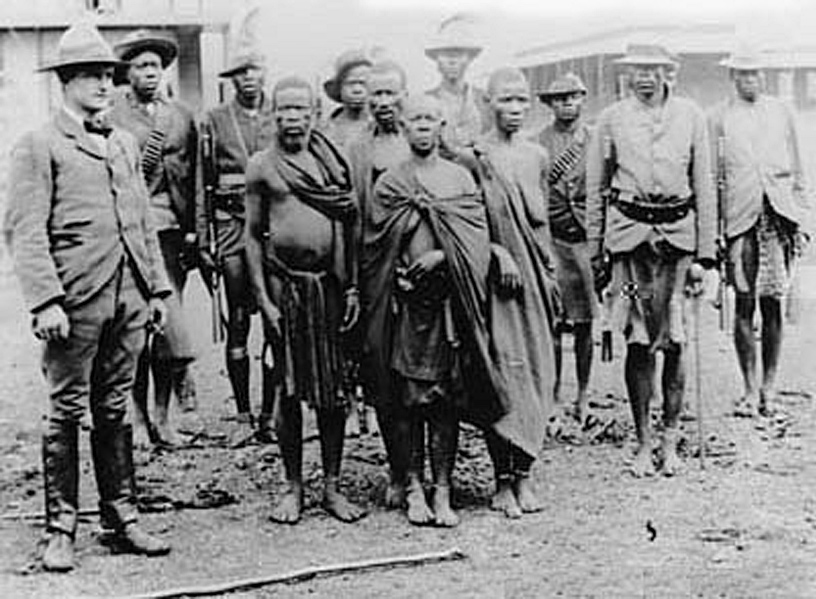
The colonisation of Zimbabwe was first undertaken by Cecil Rhodes’ British South Africa Company (BSAC) in 1890. Cecil Rhodes was one of the richest capitalists who pioneered and consolidated British imperialism in South Africa. The BSAC set out to explore mineral wealth in Zimbabwe and invaded, conquered and occupied Matebeland and Mashonaland, which were later renamed Rhodesia in honour of Cecil Rhodes. The main purpose of the occupation was to create conditions for the development of the capitalist social system of production. The mineral discoveries made in the then Rhodesia were of low quality compared to those in South Africa and that meant that, although mining would remain central to the development of capitalism in Zimbabwe; other sectors would have to be created to raise the level of profitability.
The colonialists then turned to the land and people of Rhodesia as valuable assets. They seized the most fertile agricultural land and drove Africans into reserve areas. The expropriation of the land was the basis for the development of white agriculture. This meant that African producers who had been productive had to be eliminated for white farmers to become profitable. The colonialists also confiscated large amounts of cattle and other livestock belonging to Africans. The scale of the looting was so massive that in 1893 Africans owned close to 200 000 cattle, compared to only 14 000 by 1897. The colonialists then imposed poll and hut taxes in order to force African people to supply labour to the mines and white farms.
For Africans in Rhodesia, the arrival of colonialists meant the invasion of their country; the seizure and expropriation of the most fertile land; the confiscation of their cattle and other valuable belongings; forceful relocation into reserves; and the imposition of various taxes to turn them into cheap labour for the mines and white farms. With that, the conditions for rebellion and resistance had been created. The result was intense uprisings in Matebeleland and Mashonaland between 1896 and 1898. The uprisings in Mashonaland were the last to be crushed and they came to be known as the First Chimurenga (War of Liberation). The capturing and eventual execution of the inspirational figures behind the Mashonaland uprisings, Mbuya Nehanda and Sekuru Kaguvi marked the final defeat of African resistance in the early days.
Consolidation of capitalist development in Rhodesia
Even before the First Chimurenga was completely put down, large amounts of land had already passed into white hands. To further strengthen the position of white farmers, African producers were prevented from growing certain cash crops. The patterns of land allocation and ownership were later codified into law with the introduction of the Land Apportionment Act which institutionalised racial allocation of land. The Rhodesian government also implemented supportive measures to white farmers such as subsidies and the creation of both social and technical infrastructure, all of which were not available to African producers.
To ensure the availability and sustainability of cheap African labour, a number of measures were also put in place. The most important of these was the introduction of the Masters and Servants Act which kept African wages down and empowered the settler to use his servant as he wished. In the case of mining this created working conditions that amounted to forced or slave labour (chibaro in Shona). In later years, the government introduced the Industrial Conciliation Act which excluded Africans from a definition of employee and excluded them from the right to form trade unions and participate in collective bargaining. This measure also confirmed the place of white workers as partners in the exploitation of African workers. Lastly, measures requiring Africans to carry passes or certificates were introduced in order to restrict their freedom of movement.
The Rhodesian capitalism after World War II and the UDI
After the Second World War the economy recorded high rates of growth and the manufacturing industry expanded. Agriculture also grew due to high prices in world markets. Whilst capitalists’ profits were growing due to the growth in the economy, the living standards in peasant communities continued to decline, accelerating the emergence of the working class. The growing economy also increased the size of the industrial working class to the extent that in 1948 and 1954 general strikes by African workers had to be forcefully crushed by the state. There was also resistance in the countryside as communities rose against the implementation of the Land Husbandry Act which tried to concentrate land in the hands of few African farmers as way of diluting African resistance by building a buffer between the settlers and the oppressed. Although these strikes and uprisings were swiftly crushed, the growing militancy of the African working class and social forces in the countryside forced the state to introduce some reform measures. The first was the moderation of the ICA in 1959, which allowed the formation of trade unions of African workers and regulated their functioning. The second was a shift from a strategy of separate development to racial partnership as a further way of diluting African resistance.
In the early 1960s Britain began to entertain the idea of modifying imperial rule with measures aimed at decolonisation in response to the militant African working class and discontented peasantry. In response, Ian Smith, who became prime minister of the Rhodesian Front (RF) government in 1964, declared independence from Britain in 1965 in what was known as the Unilateral Declaration of Independence (UDI). The UDI represented attempts to restructure capitalist social relations on the basis of economic nationalism. The UDI strategy of economic nationalism relied heavily on state subsidies, protective measures as well as assistance from South African capitalists. Over and above these factors, the UDI strategy initially worked due to favourable environment of a growing world economy.
Although widely seen as defiant of Britain, the UDI was aimed primarily against the resistance of African people and only secondarily against Britain since it only concerned matters of how best to secure the sub-ordination of the African population. At some stage the RF thought it had completely eliminated resistance as the economy was indeed looking strong and the African people looked weak. It was at this stage that Britain made a shift and announced its readiness to recognise Rhodesia’s independence.
The Struggles of the African masses and the early years of the Nationalist Movements
An important feature of the struggles waged against British imperialism and Rhodesian capitalism is that these struggles were led by non-working class elements within the nationalist movements that emerged in the early 1950s. The political and organisational weaknesses, as well as domination by a reformist and bureaucratic leadership, meant that the working class was unable to exercise leadership over the struggles. From 1959 trade unions registered with the state, fighting on purely economic issues and only secondarily took up issues of national liberation.
In the 1950s African resistance was organised under the banner of the African National Congress (ANC). Although originally formed in the 1930s, the organisation was only resuscitated in 1955 after almost twenty years ineffectiveness. The African National Youth League was another formation that became active in the struggles. The two formations merged in 1957 to form the Southern Rhodesian African National Congress (SRANC). The SRANC called for the need to reform colonial rule and establish an African government. The SRANC was banned and replaced by the National Democratic Party (NDP) in 1960. The main activities of the NDP centred on winning the support of British imperialists for majority rule in Rhodesia. In 1961 the NDP was invited to participate in a conference in Britain to deliberate on the future of Rhodesia. The outcome of the conference was an agreement that provided for a government with 15 seats for blacks and 50 for whites. Differences over this agreement led to a split within the NDP resulting in the formation of the Zimbabwe African People’s Union (ZAPU) in 1961. ZAPU was banned in 1962.
Disagreements within its ranks over how to proceed with the struggle in the light of the banning led to a split that saw the formation of Zimbabwe African National Union (ZANU). ZAPU continued to be strong in Bulawayo and western parts of Rhodesia, whilst ZANU became strong in Harare, the Midlands and eastern parts of Rhodesia.
The main emphasis of the nationalist movements in the early period, both in terms of demands and methods of struggles, was to find a peaceful path to majority rule in the country. This approach continued even when the African masses were engaged in struggles in opposition to the UDI. In 1965 a general strike got underway in Bulawayo and unleashed a series of spontaneous struggles in its wake. Both ZAPU and ZANU were operating from exile and were not able to lead and co-ordinate the struggles. Factional battles within and between the two formation further reduced their ability to pay closer attention to the evolving struggles of African masses.
In 1971 members of both ZAPU and ZANU who were still inside Zimbabwe regrouped in a new party called the United African National Congress (UANC) and elected a Methodist bishop, Abel Muzorewa, as its leader to avoid the new party being bogged down in factional battles. The main aim for forming the UANC was to conduct political education among the people and strengthen their struggles. Under Muzorewa’s leadership, however, the UANC followed the strategy of the Smith government and never paid attention to the struggles of the masses as planned.
Both ZAPU and ZANU continued to exist as exile movements and organised armies in Zambia – the Zimbabwe People’s Revolutionary Army (ZIPRA) and the Zimbabwe African National Liberation Army (ZANLA) respectively. ZIPRA oriented the military training of its cadres towards the USSR while ZANLA looked to China to gain knowledge of how to work with light weapons and train cadres to work among the rural masses. The period from 1966 – 1972 saw the emergence and rise of acts of sabotage by guerrillas that marked the beginnings of the armed struggle.
Failure of the UDI and the Second Chimurenga
By the beginning of the 1970s it was clear that the UDI was not working. There were economic and political factors that account for this failure. At an economic level, the beginning of the 1970s saw the onset of an international economic crisis that affected capitalist economies throughout the world. The Rhodesian capitalist economy, like most capitalist economies in the world, experienced a downturn. In the case of Rhodesia, the sanctions imposed by Britain and other western countries played some role in deepening the impact of the crisis. At a political level, Rhodesia also suffered from the increasing radicalisation of the masses, itself an effect of the impact of the economic decline.
The radicalisation of the African masses and their growing support for the war made it possible for the nationalist movement to become a decisive force in undermining the Rhodesian government. The collapse of the Rhodesian capitalist economy drove more Africans to seek radical solutions to their problems resulting in tremendous growth in the support for the guerrillas among the masses.
It is in this context that the nationalist movement declared the Second Chimurenga in 1972. The presidents of the frontline states advised both ZAPU and ZANU to join forces in a common military front against the Rhodesian government. The result was the formation of the Zimbabwean People’s Army (ZIPA), which played a critical role in consolidating the armed struggle when the nationalist leadership was not fully committed to its execution.
In addition to the above economic and political factors, developments in Mozambique also brought another dimension to the pressure on the Rhodesian government and its backers in South Africa and Britain. In 1974 colonial rule came to an end in Mozambique. This generated fear both in South Africa and Britain that colonialism in Rhodesia would also come to an end, threatening the future of imperialism in the whole region. A combination of these factors caused both the Rhodesian government and the imperialist countries to search for an alternative solution to the unworkable UDI.
The road to Lancaster House Conference in 1979
In 1976 the British government convened a conference in Geneva in an attempt to facilitate an end to the war in Rhodesia and secure stability to capitalist development in the country. In the run-up to the conference, ZAPU and ZANU came together to form the Patriotic Front (PF), under whose auspices they participated in the conference. This conference failed to produce an agreement and the Rhodesian government began negotiations with Muzorewa that culminated in an agreement that came to be known as the Internal Settlement, which was reached in 1978. The following were the key provisions of the settlement: 28 parliamentary seats reserved for whites; security and police forces to be left in white hands; protection of property rights; and independence of the judiciary. The trio of Abel Muzorewa, Nadabaningi Sithole and Chief Jeremiah Chirau joined Ian Smith and formed an interim government.
It soon became clear that Muzorewa and his comrades in the Internal Settlement had no mass appeal as the regime of the Internal Settlement failed to end the war and was therefore unable to stabilise capitalist rule in Rhodesia. Imperialists continued to search for an all party solution in view of growing intensity of opposition to the Muzorewa regime. The guerrilla war intensified and this continued to impact negatively on the Rhodesian economy resulting in a growing fiscal crisis as more and more resources were devoted to fighting the war. In the process, ZANU through its military wing began to create pockets of dual power by winning ‘no-go’ areas in parts of the country. Such gains on the part of ZANU further deepened its implantation in the rural areas as the only party capable of successfully leading the African masses to liberation.
The growing intensity of the war and the failure of Muzorewa’s government to stop it made a new solution necessary and the Lancaster House settlement possible. British efforts to stabilise capitalist rule in Rhodesia were supported by the leaders of the frontline states who were also desperate for a to return normality in their own economies that were negatively affected by the war. The Lancaster House Commonwealth Conference began in mid-1979 and resulted in what came to be known as the Lancaster House Agreement, which were a set of measures aimed at stabilising capitalist social relations in Zimbabwe.
Capitalism stabilised under the Mugabe Government
Unlike Muzorewa and his comrades, the PF would prove to be a valuable asset in the hands of the imperialists in that it carried the support of the African people with it. The Lancaster House Conference made possible what the imperialists failed to achieve for a number of decades: to find a formula to resolve the problems facing capitalist development in Rhodesia with the consent of the masses. The PF made a series of compromises which guaranteed the status of leadership of the new Zimbabwe but in reality represented a set-back for the Zimbabwean workers and peasants.
The following were some of the main provisions of the Lancaster House Agreement between Britain, the PF and Muzorewa:
- The protection of white ownership of land for a minimum of ten years, after which period the land would be bought out using the principle of willing buyer – willing seller, with the USA and Britain providing funding.
- White representation of 20 seats in a 100 seat parliament.
- The protection and continuation of the state structures which were essential components of the repressive Smith regime through restrictions against constitutional changes and retention of Rhodesian forces.
In addition, the Lancaster House agreement also made the following transitional provisions that applied in the run-up to the first democratic elections:
- A ceasefire agreement confining PF forces to bar racks
- British control of the transitional government and supervision of the elections
- The Rhodesian police force to maintain law and order
- The security forces confined to bases but could be mobilised by the British Governor to deal with any security situation that arose.
British imperialism entered the transitional period and made use of its strategic position to settle critical matters that would have a bearing on the nature of a democratic Zimbabwe. One of these was to weaken the power of the nationalist movement with a view to limit its capacity to undertake a meaningful reconstruction process. A number of measures were used, including the extension of the state of emergency until 1980, widespread intimidation and a range of repressive tactics.
All these measures were aimed at weakening the movements and isolating the leaders from their radical base.
In spite of these measures, the anti-imperialist forces still emerged victorious from the election that was held in February 1980 and the country was renamed Zimbabwe. ZANU (PF) won 57 seats, ZAPU won 20 and Muzorewa won 3. Whites held on to their reserved 20 seats to complete the seating of parliament. The outcome of the elections was of academic and symbolic significance as far as the British imperialists were concerned. This was so for two reasons. Firstly, the fundamental tenets of the new society were already decided. Secondly, the mass movement was severely weakened by repressive measures unleashed during the transition that drastically reduced its capacity to exercise pressure on the new government to carry out radical reconstructions measures.
Part Two: 1980 to the present
Post-independence boom
After the victory, Prime Minister Mugabe offered a hand of reconciliation to the losing parties by forming a coalition government, with some members of the opposition (notably Joshua Nkomo) being offered cabinet posts. Even the whites who held positions in the civil service during the colonial era were not fired in the prevailing spirit of forgiveness and reconciliation.
On paper, the government inherited a sound economy with manufacturing, agriculture and mining providing a combined 55% of the country’s Gross Domestic Product (GDP), making it the envy of many African countries. In early ‘80s, the new government invested heavily in social welfare and development. Substantial achievements were made in the areas of small-scale farming, health and education. For example, the country reduced its infant mortality rates from 86 to 39 per 1 000 live births; raised the immunisation rate from 25% to 80%; raised life expectancy from 56 to 62 years; and doubled its primary and secondary school enrolment. However, this boom was to experience a knock as early as 1982, when ethnic-based political rivalry took centre stage, leading to the killing (by government forces) of tens of thousands of civilian supporters of the country’s main opposition.
Gukurahundi
Gukurahundi, a Shona word meaning “the first rain that washes away the chaff of the last harvest before the spring rains”, is perhaps the darkest period in the history of post-independence Zimbabwe. This is the five year period in which the notorious North Korean-trained Fifth Brigade government army murdered more than 20 000 people in the mainly Ndebele-speaking provinces of Matabeleland and Midlands. Distinctive in their red berets and camouflage gear that was different from that of the mainstream army, the Fifth brigade was sent by Mugabe to crush his political opponents, whom he accused of trying to topple him. With the leadership of PF-ZAPU under arrest for treason and some in exile in Britain, Botswana and South Africa, the Fifth Brigade’s reign of terror left a trail of destruction that is still felt in many parts of Matabeleland today. The carnage only ended with the December 22 1987 Unity Accord between PF ZAPU and ZANU (PF). After the Accord, Mugabe became the country’s first Executive President, with Joshua Nkomo being one of the two Vice- Presidents.
Organised labour
Organised labour has always played a leading role in the politics of the country, thus most of the country’s leaders have a labour background.
Historically, the colonial government had always managed to control trade unions through divide and rule tactics. At independence, there were about six national labour federations, all of them with different political orientations. The new black government tried to advance the cause of the workers by not only promoting the unification of the unions, but also through encouraging companies to have workers’ committees. On 28 February 1981, more than 52 unions were united under the umbrella name of the Zimbabwe Congress of Trade Unions (ZCTU). May Day was declared a public holiday and for some time, the labour ministry continued to sponsor the Workers’ Day celebrations. Although government’s intentions were honourable at the beginning, it was clear that the paternalistic relationship between the state and unions was set to continue even after independence. For example, the first Secretary General of the ZCTU was Albert Mugabe, a brother of Robert Mugabe. Doubtless, this retarded the growth and development of the union, with many pointing out that the ZCTU was just an appendage of the government.
After the death of Albert Mugabe, the ZCTU began to push for its independence and by 1988, it formally severed all ties with government,arguing that it wanted to organise its own May Day celebrations without funding from the government. This period also saw the rise of Morgan Tsvangirai – a mineworker and activist – as the secretary general of the ZCTU. As economic recession began to bite in the late 1990s, the government formed a satellite union, the Zimbabwe Federation of Trade Unions (ZFTU) in 2001. Headed by well known ZANU (PF) sympathisers and war veterans, the ZFTU was formed in order to draw attention away from the ZCTU, which was becoming more and more vocal in its criticism of the malpractices of the government.
Talking Left and acting Right
After more than a decade with virtually no opposition to talk of, the ZANU (PF) government was slowly ditching the developmentalist approach that it had adopted in the period after independence. Many people started accusing ZANU (PF) of “talking Left and yet acting Right” during the early 1990s. For example, in 1989, a left-wing ZANU (PF) parliamentarian, Lazarus Nzarayebani, was censured by his party after declaring that ZANU (PF) was misleading the people by making them believe that they are pursuing a socialist agenda: “You don’t talk about socialism in a party that is led by people who own large tracts of land and employ cheap labour. When the freedom fighters were fighting in the bush they were fighting not to disturb the system but to dismantle it. And what are we seeing now? Leaders are busy implementing those things which we were fighting against.”
The ESAP years (1990-1995)
The introduction of the IMF-sponsored Economic Structural Adjustment Programme (ESAP) was a clear indication of the government’s shift from a social-welfare orientation into a market-based development strategy. Touted as the answer to the general economic malaise that was beginning to be felt even by the middle class, ESAP sought to rein in government expenditure and streamline its activities in the market. In order to achieve this, the government was expected to: reduce the civil service; privatise or commercialise parastatals; and remove all labour restrictions, price and exchange controls, investment and import regulations, as well as many government subsidies. Some of the promised fruits of ESAP included: reaching an annual growth rate of 5%; reduced inflation; and increased exports and foreign direct investment.
In reality, however, ESAP failed miserably. Economic growth only reached 5% in one year (1994), and averaged just 1.2% from 1991-1995. Inflation averaged more than 30% during the period, and never dropped anywhere near the 10% goal. The programme affected the poor the most, with only the middle class benefiting from the relaxation on conditions for the importation of luxury goods. With the relaxations, companies now preferred to buy finished products from outside the country for resale at home at higher margins. As a result, the manufacturing, textiles and metals sectors shrunk by as much as 50%, with job losses becoming the order of the day. The ZCTU reported in its 1996 report that their average member was 40% poorer than in 1980. The early gains made on social welfare, education and health were soon eroded due to the reduction in public expenditure.
New militancy
In response, the ZCTU mobilised workers to hold public protests against ESAP on May Day in 1991. The government began to use the law as an instrument of repression and coercion. In 1992, amendments to the Labour Relations Act were introduced which were aimed at pre-empting any form of public protest by making it illegal for workers to go on strike or to demonstrate. In June 1992, a ZCTU-led protest against the government’s neo-liberal economic policy framework was brutally quashed by the police on the grounds that it was an illegal public gathering.
A new militancy among the workers in particular and the population in general was born out of this turmoil. At the same time, opposition to government policies emerged from the country’s leading education institution, the University of Zimbabwe, where students fought daily running battles with the police protesting the removal of fees subsidies and the privatisation of catering and other services on campus. 1994 saw no more than
4 major strikes which involved skilled workers and professionals from the national airliner, Air Zimbabwe (4 days), bank employees (6 days), construction workers (4 days), and doctors. While these protest actions were largely triggered by economic factors, they also started to focus on politics, with demands for political reform also on top of the agenda, leading to ZANU (PF) politicians to come to the conclusion that ESAP was their most important policy error.
ZIMPREST (1996-2000)
In a bid to starve off the effects of ESAP, the government introduced the Zimbabwe Programme for Reconstruction and Social Transformation (ZIMPREST) in 1996. However, the programme was based on the same austerity measures that were contained in ESAP. With inflation still above 20%, unprecedented civil service militancy emerged, beginning with the August 1996 two- week civil service strike which involved more than 200 000 civil servants, and the 1998 ‘Food riots’. With economic dissatisfaction merging with calls for political reform, Zimbabwe saw a unification of politicians, students, workers and the unemployed with churches, human rights and women’s organisations, in the fight for social justice in the country. In March 1998, ZCTU-led stay-aways forced the government to retreat on plans to introduce a 2.5% increase in sales tax and a 2% development levy. These small but significant labour victories laid the groundwork for the ZCTU to step in and easily assume national oppositional leadership.
The Movement for Democratic Change (MDC)
After years of side-stepping increasing calls from its membership to form a workers’ party, the ZCTU leadership finally agreed to form the Movement for Democratic Change in September 1999, a party which was to provide the stiffest challenge to the ruling ZANU (PF) since independence.
Although workers were the backbone of the MDC, from the start, the opposition party was (at best) a ‘popular front’ comprising of the local bourgeoisie, middle class professionals, academics, activists, resident associations, labour unions, and students’ and women’s groups. Within a short space of time, a middle class bloc began dominating the party and in 2000, workers made up only 15 percent of the MDC’s candidates. Munyaradzi Gwisai, a member of the International Socialist Organisation (ISO) which had joined the MDC in 1999, was expelled early in 2002 after ISO published a paper blaming the MDC’s declining fortunes on “the hijacking of the party by the bourgeoisie” and a failure to deal with the question of land reform. The official MDC policy also shifted, with the party courting Western governments and committing itself to free market policies – in the process succeeding in being to the right of ZANU-PF. Up to today, ISO blames the failure of the MDC to unseat Mugabe’s regime on its lack of radicalism and its shift rightwards, which has allowed ZANU-PF to gain ground by left posturing.
The MDC split into two factions in November 2005 apparently after a tightly contested vote to go for senate elections which were introduced by the government in September of the same year. The two factions are headed by Arthur Mutambara and Morgan Tsvangirai respectively. Recent attempts to re-unite the factions ahead of the 2008 elections have not yielded anything.
Land invasions
Despite the 1990 lapse of the Lancaster House constitutional block on compulsory acquisition of land from white farmers, the ZANU (PF) regime did not seem concerned with pursuing the issue of land re-distribution with any seriousness. This was mainly because Mugabe had managed to forge alliances with the white farmers, many of whom who received generous government grants and subsidies. In fact, in 1980, Mugabe had made it clear that despite the change in government, white businesses and farmers could rest assured that their living conditions would be guaranteed. Thus, when impatient land-hungry peasants and farm workers invaded a few white-owned commercial farms during 1997-1998 in parts of the country, the government responded by sending in the army to evict the invaders. Mugabe only managed to bring up the issue of land redistribution when he was faced with a defeat by the newly-formed MDC in the 2000 elections. This led many critics to believe that he used the land issue as a campaign gimmick.
The more serious land invasions began in earnest in February 2000 and were led by Chenjerai Hunzvi and a group of war veterans from the country’s ‘70’s liberation struggle. In an uncoordinated and often violent manner, the war veterans (very few of whom actually fought in the liberation war in the 1970s), invaded more than 1 000 white-owned farms within a space of four months, often leaving a trail of destruction and burnt farm houses in the process. The government actively encouraged the carnage, where five white commercial farmers were killed and thousands of farm workers were displaced and left jobless. (See the article on farm workers elsewhere in this edition.)
The land issue was to remain unresolved, however, seven years on, as it emerged that most of the farms taken from whites were actually allocated to high ranking government, military and ZANU (PF) officials as a way of maintaining their loyalty. Food production dropped drastically in the subsequent years, and for the first time, the country had to import its staple food, maize, from neighbouring countries in the region.
Increasing repression
Over this period, the country’s relations with the international community sunk to lows that were reminiscent of the late 1960s and 70s under the leadership of Ian Smith. Government refused to acknowledge the extent of the crisis in the country, often blaming the ‘smart’ sanctions imposed on ZANU (PF) politicians as the cause of the crisis. The country has been the focus of increased international criticism since 2000 after the enactment of legislation which sought to hinder people’s freedoms, not only of expression, but also of association and assembly. Laws such as the Access to Information and Protection of Privacy Act (AIPPA), the Public Order and Security Act (POSA) and various constitutional amendments made it almost impossible for the opposition to organise, especially around elections. Strikes and any form of public protest were declared illegal, as well criticising the president or his policies.
Shortages
Since mid-2002, the country has been in the grip of severe shortages of basic commodities such as cooking oil, salt, fuel, foreign currency, beef and poultry products. Most of these commodities are only available on the black market, where they fetch anything up to 5 times their value in the supermarkets. This has driven inflation through the roof, with current conservative estimates putting the inflation rate at 6 000% – the highest ever rate for any country not in a war situation. The government’s response has been to continue to cry foul and allege that the economy is being sabotaged by the West and local private companies who are pushing for regime change.
Attempts to contain the inflation have been fruitless at best, with the 2006 attempts the slash three zeros off the country’s currency yielding nothing. In July 2007, the government introduced price controls in a poorly-planned ‘social contract’ between business, government and labour, which has resulted in more shortages as commodities are removed from the shelves and are sold on the black market. Both business and labour have argued that they have not seen the conditions of the ‘social contract’ on price freezes and have not been consulted. Meanwhile, Mugabe has responded by threatening to take over companies that do not comply with the new pricing regulations.
Further readings on Zimbabwe
Astrow, Andre, 1983 – Zimbabwe: A revolution that lost its way?, Zed press Bond, Patrick and Manyanya, Masimba, 2002 – Zimbabwe’s Plunge: Exhausted Nationalism, Neo-liberalism and the search for social justice, University of Natal press.
Leave a Reply
You must be logged in to post a comment.