
Recently, a national conference to review ten years of education in South Africa was held in Johannesburg where representatives of government, teacher unions, research organisations, and representatives of community organisations, spoke to various aspects of education. In this article I will comment on some of the obvious but urgent questions in South African education. This conference held on the 13 and 14th of May 2004 presents a rare and convenient way of discussing the most up-to-date views of some of the influential South African commentators on education and society.
Before discussing the proceedings of the conference I want to make a few observations: firstly, that the conference was convened by the Centre for Policy Development and Management (CEPD). The CEPD is an education research organisation based in Johannesburg with historical links to the Congress Movement. Secondly, most observers said they believed the conference to have been timely. By this I want to believe that at least a few of the speakers were being sarcastic alluding to the fact that the conference was being held safely after the general election. Thirdly, note that the theme of the conference is “1994-2002: The Role of Education in a Decade of Democracy
A Critical Review”, a seductive title that did not live up to expectations created. Fourthly, the conference offered very little chance for views of parents, learners and communities to be heard. Instead, opinions of experts and bureaucrats were privileged. Fifthly and finally, it is very telling that early childhood development and adult education, which are the least resourced aspects of education and yet the most important to citizens of the future and of today, were not discussed at this conference. In these two areas even desperate spin doctoring and manipulation of statistics has not concealed the appalling failure of the state.
The director of the CEPD, the Second Secretary of the European Commission in South Africa, the General-Secretary of the South African Communist Party (SACP) and the chairperson of the South African Human Rights Commission (SAHRC), gave varied inputs and set the tone for the conference.
There was consensus amongst these speakers that the foundations for the realisation of the decades long struggle and demand for free public education for all had been laid. The chairperson of the SAHRC went on to instruct the conference that the question is not whether we have done well as country. It was too obvious to the SAHRC that we had, indeed, done well. The correct and difficult question was understood to be: how well have we done as country in the past ten years? To pose the question in this way is misleading and is a reminder that people who are conscripted intellectuals in the service of the state are, by definition, not allowed to think beyond boundaries set by the state.
Given that statistics is their strength, it is revealing that none of these gentlemen presented any statistical evidence that lends support to the view that we had indeed done well as country.
Even official statistics paint a picture of devastating poverty and destitution. In a determined effort to salvage something positive from the past decade of democracy, we were told that what fundamentally separates South Africa from other countries is that we have socio-economic rights (i.e. the right to housing, education or healthcare) enshrined in the constitution. The vast majority of people in India are poor, but then they do not have a constitution that guarantees socio-economic rights. In South Africa we have a constitution that guarantees socio-economic rights, and yet the vast majority of people are poor. This difference between, for example, India and South Africa is real but it is not an important or a fundamental one. A refined argument does not drive away hunger nor pay for school fees or electricity. The words in the Bill of Rights clauses are just that, words.
The point is that for these rights to be translated into meaningful improvement in people’s lives require political will, resources and training. The conference agreed as a whole that the present policy of user-fees for social services and reduction in social spending by government guarantees that such an improvement will not occur for the vast majority of the poor and working class. A genuinely difficult and fundamental question was asked from the floor: how do we pay for quality education when the state will not give a significantly greater allocation to education because of the economic and political programme of neo-liberalism in South Africa, the Growth Employment and Redistribution Strategy (Gear)? In response, the SACP claims to have detected yet another strong current in the corridors of power that wishes to implement what can best be described as a set of “pro-poor” policies.
The Deputy-Director General in the national department of education exemplifies the malady of the state as a body. He started out by correctly diagnosing the problem with education in South Africa. He admits that the key question is the provision of basic social services and jobs because poverty bars children from schools, from staying in school, or from doing well at school. But no more was said of what should be done with the very serious problem of poverty. Instead he proceeded to discuss at amazing length and detail, district, provincial and national level systems of co- ordination of the department of education in order to supposedly speed up educational delivery. I was stupefied. Like the most junior of state officials, the Deputy-Director General seemed to recognise and sympathize with those who are paying the price of our “peaceful transition” through destitution and watching their incomes go through the floor, but he felt relieved that this was not his category of problem. He gladly referred this central issue, unemployment and poverty, to another conference, another department, and another sphere of state. Participants should be forgiven if they therefore concluded that the state is uninspired, is not earnest and lacks a sense of urgency in handling the social crisis besetting South Africa.
Margaret Legum of the South African New Economics made a number of interesting and relevant points in her contribution. She argued that while partnerships with the private sector to build schools may be the only option for some communities as result of government’s refusal to spend adequate amounts on infrastructure, we must not lose sight of the primary goal, which is to get to a point where education, healthcare or housing is fully paid for by the state. We must deny Big Business our gratitude! She also made the point that government programmes aimed at the poor are profoundly insane. To get welfare or a school fees exemption you need to go through a means test. A means test requires that the poor and the destitute present incontrovertible documentary evidence that they have nothing. In the case of school fees we all know what this means. It means parents or guardians have to humiliate and demean themselves by parading their poverty in front of school governing bodies resolute about collecting school fees.
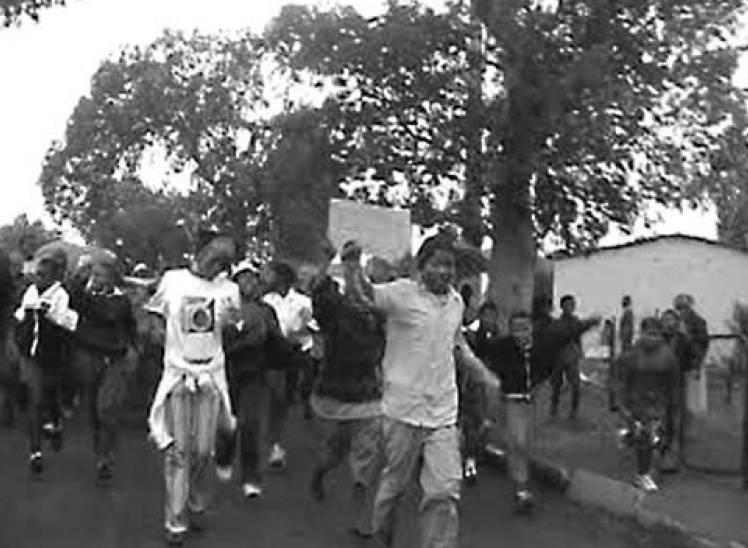
The most important contribution was that made by Comrade Dodo from the Education Rights Project (ERP) and Anti-privatisation Forum in the dying hours of the conference. He gave a clear, concrete and vivid account of the state of education in his community, which cut through the monotony and obscurantism of statistics and economic-management jargon of many of the previous speakers. He made three vital points: firstly, regardless of what the constitution or policy says or does not say, on the ground, education is not free. Education is a pre-paid service like water and electricity. Secondly, because of half-hearted efforts of government to deal with poverty, educators in poor schools and communities spend a large part of their day acting as social workers, parents, nurses, and policemen. In such a context, what does quality education really mean? Thirdly and finally, Dodo observed that the conference had declared more out of despair than conviction that a shift in how education is funded, what education is for and who runs it, can only be addressed by democratic movements of people. To this Dodo responded by saying that there are many locally based but important initiatives by the ERP in conjunction with organisations like the APF that have already begun to mobilise around these questions. That it was up to the participants in the conference to put their money where their mouths were by supporting or joining this movement. He ended on a concrete and programmatic note by inviting the conference to join June 16 activities organised by the ERP and other social movements to fight in the streets for the right to free, quality public education.
*brian Ramadiro works for the Education Rights Project and is active in various social movements.
Leave a Reply
You must be logged in to post a comment.