
A Focus on Publishing In times of Crisis
Welcome to the First edition of the
Khanya Journal For 2010
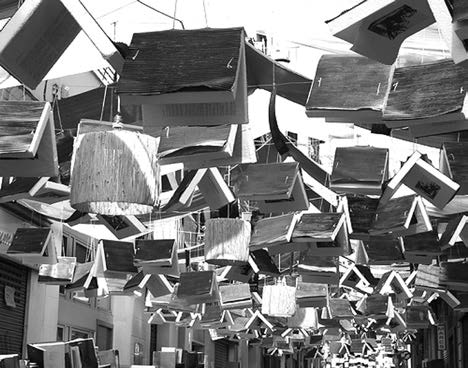
In this issue we focus on publishing in South Africa fifteen years after the country’s first democratic elections. This is a vast topic and affects people’s lives in many respects: the need for daily newspapers, educational textbooks for schools, and the wide world of books, both fiction and non-fiction, for fun and for hobbies. This raises important issues about how and who publishes, who controls the industry, the distribution and the price of books and whether they are affordable and accessible to children, to young people, to women, to adults, to schools and to communities. South Africa remains a highly unequal society. In this edition we discuss publishing especially in relation to the quality of people’s daily lives: the reading and writing culture amongst working class people in this country.
In the first article on ‘ A culture in crisis – reading in post apartheid South Africa’, Oupa Lehulere analyses why a small section of public reads and buys books, the collapse of libraries, the poor educational skills amongst young people, and the lack of books in indigenous languages. Lehulere argues that this is a result of three factors that are also related to each other: the legacy of apartheid, the government’s macroeconomic choices that have resulted in high unemployment, especially of young people, and the structure of the publishing industry in South Africa. This is followed by Martha Legong’s article on ‘Libraries in crisis’. Legong discusses the state budget cuts to libraries, in South Africa and internationally. This affects the funding to community and school libraries, and in South Africa, only 7% of schools have libraries. Legong argues communities and users need to struggle for libraries, and that this should not be separated from other community struggles.
Nerisha Baldevu’s article is a brief overview of the important experience of Ravan Press, a progressive publisher. Despite apartheid repression, they contributed to the development of a critical culture of reading and writing. Ravan Press produced thousands of titles, predominantly from black writers, on a range of issues that informed the popular struggles against apartheid.
After years of experience and working with communities and social movements, Khanya College initiated the first Jozi Book Fair at the Africa Museum in 2009, to respond to the crisis of reading and writing in our communities and society. The Jozi Book Fair brochure outlines the aims of the broad based and multifaceted programme to develop a culture of reading and writing in South Africa. The perspective includes engaging all sectors of society – readers, writers, children, schools, small publishers and libraries, and to promote indigenous languages. This year the Jozi Book Fair takes place on 7, 8 and 9th August 2010 at the Museum Africa in Newtown. This Fair is therefore a direct response to the crisis in publishing.
Searatoa van Driel provides more information on the Jozi Book Fair, through her ‘Author Profiles’. Her article includes three profiles. Lindsey Collen is the guest of the Book Fair and her focus is on social struggles in Mauritius. The second profile is on South Africa cartoonist, Zapiro, and his struggle for freedom of expression. The third profile is about Ima, an indigenous Sami writer from Finland, and her struggle for the Sami language.
The overview initiatives of some small publishers, who participate in the Jozi Book Fair, are outlined in Khosi Hlatswayo’s article. Hlatswayo discusses the creative and different ways and various media that the small publishers use in keeping their focus to promote reading and writing.
Molefe Pilane argues for the need to ‘Write and speak in indigenous languages to combat xenophobia’. Pilane invokes precapitalist societies where the stranger, the foreigner and the visitor were once respected and treated hospitably.
Through the promotion of indigenous languages, barriers can be broken, tolerance developed, and indigenous knowledge systems preserved.
Florian Hollerer, discusses the ‘Houses of Literature’ that have sprung up all over Europe as a space where reading, writing, art and culture are promoted. Some of these ‘Houses’ have longer histories than others, and, although they differ from country to country, they all promote active citizenship, engagement and co-operation. Hollerer shows how co-operation can be developed, for instance between literature and law, architecture and urban struggles and so forth.
The Open Mic section includes three articles. Anna Davis van Es discusses ‘Feminist education as a tool for building movements’. Van Es argues that women bear the brunt of neoliberalism and yet there are few struggles that focus on their specific role and position in society. Instead, gendered practices continue in organisations, despite traditional responses such as gender training and gender structures.
On a different note, Mphutlane wa Bofelo, traces the importance of the Soweto students’ uprising in 1976, in ‘Igniting the Nation’s Imagination’. Bofelo reflects on June 1976’s influence on literature, plays and film and the role of Black Consciousness in the shift in Black people’s consciousness.
In the last article in this section, Allan Horwitz, asks ‘Is there a ‘new’ poetry in post apartheid South Africa’. Horwitz traces art and poetry under apartheid and the struggles to find authentic voices. In contemporary South Africa, while many gains have been made and freedoms achieved, ‘the critical apparatus’ is still very low.
Regular Features
The Education Section focuses on ‘Skills for Learning’.
In the Study Group Corner, Dorris Lekgowa, the convenor, outlines a profile of the Ikageng Study Circle in Rustenburg. In the Book Review section, Malaika Lesego Samora Mahlatsi reviews ‘The Politics of South African Football’ by Oshebeng Alphie Koonyaditse’s. The Document Section includes the Association of Research Libraries Statement to Scholarly Publishers on the Global Economic Crisis. This is followed by our standard Barometer of Resistance.
We hope that you find this edition interesting and enjoyable.
Leave a Reply
You must be logged in to post a comment.