
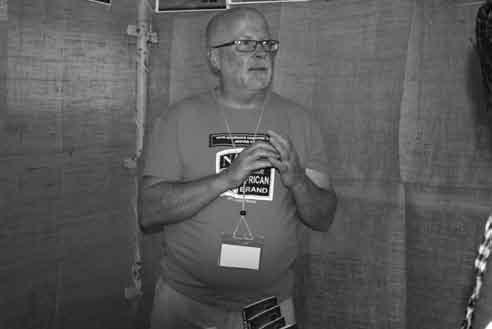
In this article Fouad Asfour* summarises the main discussion of the Independent Publishers Network meeting
Theme and context of the network meeting
Khanya College’s Winter School theme ‘Crisis and Resistance’ influenced the independent and progressive publishers network meeting held at the Museum Africa on 6-7 August 2009, during the Jozi Book Fair. Publishers who want to reach the masses today face a number of obstacles, including the Apartheid legacy which kept workers voiceless and lowpaid. Currently, no publishing house caters to the needs of the masses in this country. Mainstream publishing houses pretend that only the educated middle and upper classes want to buy books. However, the real reason is that publishers refuse to produce books for the masses that are reasonably priced as it cuts into their profits. The price of the cheapest paperback book is equivalent to 12 loaves of bread. The basic aim of the network is to produce books cheaply, that enables all South Africans to buy them at more or less the price of a loaf of bread.
Participants of the publishers network meeting
Publishers had the opportunity to participate and/ or exhibit in the first Jozi Book Fair on 8-9th August at the same location. The participants at the network meeting included: Bibi Bakare-Yusuf (Cassava Republic, Nigeria), Billy Kahora (Kwani Trust, Kenya) and Martin Njaga (Storymoja Hay Festival, Kenya). Participants from South Africa included: Liepollo Rantekoa (Chimurenga Magazine), Makosha Dimo and Vonani Bila (Timbila Poetry Project), Mark Weinberg (Alternative Information Development Centre), Mxolisi Nyezwa (Kotaz Publishing), Robert Berold (Deep South), Sabata- Mpho Mokae (Sol T Plaatje Library and Museum), International Labour Research and Information Group, Ge’ko Publishing, reUnitedsiblings, Dinkwe, keleketla! Library, Academic and Non-Fiction Authors’ Association of South Africa (ANFASA) and New Frank Talk Press.
What was discussed and why the network is important
The independent publishers exchanged their knowledge and experience in the practise of independent publishing. The conditions of local distribution of books and representation of small publishers were examined, and possible ways to collaborate with other independent publishers. Participants were invited to continue as the network to discuss initiatives and strategies to produce and distribute printed publications, both locally and internationally. This includes linking the network with the National Library services, the education system in South Africa and indigenous language publishing initiatives. There is also a need to explore access to wider English-speaking audiences in the global South (India, Indonesia and elsewhere) through book fairs, literary festivals, literary awards and digital publishing initiatives. A number of independent and progressive publishers exist in Southern African who publish new and progressive writing, ranging from fiction, poetry, non-fiction, local and indigenous language literature publication, to critical and cutting edge writing as well as academic and scholarly writing. The network meeting aims to mobilise a range of potential supporters, including other small and self- funded publishers, magazines and journals, NGOs and civil society organisations. The network also explored how to link young writers and cultural workers to other independent and progressive publishers, magazines or journals. Additionally, a discussion of digital forms of publishing and editing, for instance through Content Management Systems, gave publishers and writers access to information about digital publishing and the facilitation of exchange of texts and articles.
The role of the intellectuals and creative workers
In South Africa, and internationally, art and culture has been de-politised. As a network of independent and progressive publishers in Southern Africa, our starting point is that art and culture have a responsibility towards society. Publishing is therefore a weapon of intellectuals and politically conscious creative workers: to distribute dissenting voices in newsletters, pamphlets and leaflets. However, the mainstream, commercial media and advertisement dominate. Many creative workers in the arts and culture industry have joined the rush for the rich and bountiful, entertaining the upper classes. The demand for critical literature focuses on certain staid struggles only rather than the social realities of the masses today. Publishing for the needs of the working masses is mostly done by NGOs and community organisations. Apart from them, only a few artists and creative workers realise their social responsibility to give voice to the exploited masses, willing to risk their careers by engaging themselves politically.
Difficulties for independent publishers today
While independent publishers recognise their social responsibility towards the masses, they face a number of difficulties because commercial interests dominate the publications market. Only large publishers access physical distribution of publications in and throughout Southern Africa, based on sustainable profits. While more young and vibrant writers are emerging, independent and non-commercial publishers cannot access the services of commercial distribution services. This explains why successful writers from Africa are being published by overseas commercial publishing houses, and being decorated in European or Northern American literary festivals.
Why electronic publishing cannot be the only solution
As a response, independent publishers have to choose different ways to gain visibility to reach a larger audience. While electronic publishing has been praised as a low-cost mass medium device, Internet access is not available for the masses. Internet publishing has proven successful for informal and individually crafted approaches, but a collective approach towards distribution, which is based on principles of solidarity and support of smaller alternative publishers, still needs to be established. At the core of the network of independent publishers lies the question how to make traditional publishing and distribution possible, i.e. bound books printed on paper and offered to masses of readers at various points of sale.
Why khanya College organised this network of Independent Publishers
One of Khanya College’s aims and responsibilities is to give voice to working people through education and the fight for literacy and publishing. These essential demands are laid down in Khanya College’s strategic declaration “Education for liberation! Arm yourself with knowledge! Organise and Fight!”. Together with the network of progressive publishers Khanya mobilises creative writing (in the field of literature, poetry etc) and the writing of publications by NGOs and community organisations. The aim is to inform the masses about their rights and to represent the demands of working people, men and women, in South African society.
Building a wider network for independent publishers
The network discussed collaboration around common distribution and marketing, locally and regionally. While all participants agreed that it is necessary to exchange publications, the main obstacle is the strong difference in the value of the currencies on the continent. For instance, while it is profitable to sell publications from Nigeria and Kenya in South Africa, the same does not hold when South African books are sold in other African countries. Therefore, different alternatives were discussed, from the exchange of electronic publishing to the granting of publication rights (of South African publishers) to publishers in other countries, including English speaking markets of the global South, e.g. India, Malaysia, Indonesia.
Publishers also discussed distribution policies to ensure wider access to people through national libraries and the involvement of governmental bodies. South Africa has the lowest level of literacy and reading audience in spite of some funded projects to promote a reading culture. In contrast, countries like Nigeria and Kenya have a stronger reading culture, where very few or no such support programmes exist. The participants agreed not to establish any formal organisational structure for the network.
Instead, it was agreed to create a regional web- portal and that all participants subscribe to an E-mail list which will facilitate further discussion and the exchange of information (to join subscribe at: http://groups.google.co.za/group/nippa).
The final plenary formed committees with specific tasks and will report back to the network. These include:
- A research team to tackle issues about Pan- African distribution;
- An advocacy team to represent the independ- ent publishers network at the Publishers Association of South Africa (PASA);
- A team to launch a mass literacy “Right to Books” campaign, addressing libraries and government;
- A Pan-African catalogue of publishers; and
- A team to look at possible ways of collaborative book distribution in South Africa.
The next meeting will be convened at the Jozi Book Fair in 2010.
Leave a Reply
You must be logged in to post a comment.