
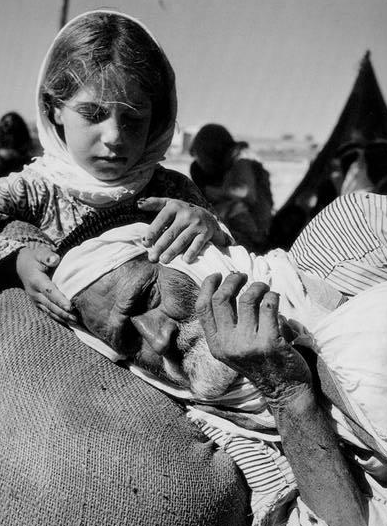
May 1948: The State of Israel is declared on the basis of the UN Partition Resolution 181. May 1948: 5 Arab states enter Israel to protect Palestinians being attacked by Israel in the newly partitioned Palestine. 1949: Israel controls 78% of historic Palestine, East Jerusalem and the West Bank under Jordanian control.1964: The Palestine Liberation Organisation (PLO)
is formed to organise Palestinians to recover their homes and to replace Israel with a secular Palestinian state. Today (2008) the PLO is an umbrella body or federal structure made up of organisations such as Fatah, the Popular Front for the Liberation of Palestine (PFLP), Saiqa, and the Democratic Front for the Liberation of Palestine (DFLP), professional, labour, and student groups.
January 1965: Fatah, a Palestinian political group is formed. It aims to create a democratic, secular Palestinian state and has remained the dominant political group in the PLOJune 1967: Israel begins a war against the Arab states, captures the Gaza Strip and the Sinai Peninsula from Egypt, the Golan Heights from Syria, East Jerusalem and the West Bank. Hundreds of thousands of Palestinians become refugees, many for the 2nd time after 1948.1967: Popular Front for the Liberation of Palestine is formed. It is a Marxist-Leninist group which has remained the second largest political grouping in the PLO. (It initially opposed the Oslo Accords in 1993.)
1969: In 1969, a faction of the Popular Front for the Liberation of Paletine (PFLP) broke away from the main organisation to form the Popular Democratic Front for the Liberation of Palestine (PDFLP). This was because they thought the PFLP was not Marxist enough and was leaning more towards a nationalist ideology. They thought that they would not be able to transform the PFLP into a working class party. They changed their name to the Democratic Front for the Liberation of Palestine in 1974. September 1970: Black September – Jordanian forces attack Palestinian fighters and the PLO in Amman and other parts of Jordan. They are forced to leave Jordan for Syria and Lebanon.
October 1973: Egypt and Syria attack Israel in an attempt to regain territories, (the Sinai Peninsula and the Golan Heights) that Israel captured in the 1967 war. They are unable to get back all the territories. March 1976: The PLO representatives were admitted into the United Nations 1978: The Camp David Accords were signed by the United States president Jimmy Carter, Egyptian president Anwar al-Sadat, and Israeli Prime Minister Menachem Begin. They were meant to address the conflict between Israel and the Arabs over the control of Palestine. They led to a peace treaty between Egypt and Israel, but did not result in peace between Israel and other Arab states. The Arab world reacted negatively to the treaty with the Arab League moving its headquarters from Egypt to Tunisia 1978: Israel invades south Lebanon with 10 000 troops and 200 tanks. 100 people are killed and 250 000 civilians lose their homes. They continue to provide support to their allies, the Christian Phalangist Lebanese Forces and to attack and invade different areas in south Lebanon 1982: Israel launches a full-scale invasion of Lebanon to force out the PLO. On 16th September 1982, under cover from their Israeli allies, Lebanese Christian militia-men entered Beirut’s Sabra and Shatila Palestinian refugee camps. They raped and murdered over 2 000 unarmed refugees, including women and children. The victims had been left defenceless after Israel drove the Syrian army and PLO fighters from the Lebanese capital. This was the bloodiest single incident of the Arab-Israeli conflict. An Israeli commission of inquiry found that Ariel Sharon was the man who allowed the militias into the camps, knowing that they wanted to avenge the death of their leader, Bashir Gemayel. Israel continued to occupy Lebanon until 2000.
December 1987: The First Palestinian Intifada or uprising against the Israeli occupation begins in the Jabalia refugee camp in the Gaza Strip. It spreads quickly to the rest of the Gaza Strip, the West Bank and Jerusalem. The uprising is also known at the ‘war of stones’ because of the stone-throwing demonstrations by the youth against the heavily- armed Israeli occupation troops. Protests such as civil disobedience, general strikes, and boycotts on Israeli products, graffiti, and barricades were part of the uprising which last until 1993. 1988: The PLO recognises Israel’s right to exist. This is repeated in 1991 at Madrid and Oslo in 1993. Israel has not yet formally recognised Palestine’s right to exist. 1991: Madrid Conference results in an acceptance by Israelis and Palestinians that implementation of UN Resolutions 242 and 338 would lead to a settlement of the conflict. This is again accepted by both sides in the Oslo Accords of 1993. The purpose of the negotiations that follow is to implement these UN resolutions (which call for an Israeli withdrawal from land occupied by force by Israel in 1967), and reach agreement on final status issues. 1993: The Oslo Accords signed between the PLO and Israel, creating the Palestinian National Authority (PA) to administer the Palestinian areas until their final status was decided. This set up the Oslo Peace Process which was supposed to lead to the establishment of a Palestinian state.
2000: The Camp David summit took place under US President Bill Clinton with the aim of reaching a final status agreement on the conflict. Israeli Prime Minister Ehud Barak and Palestinian President Yasser Arafat were involved in the negotiations. They failed because Israel used the summit to try to force Palestinians to give up more territory and to give up the right of return of Palestinian refugees. 2000: Israel withdraws unilaterally from Lebanon after 22 years of occupation. The withdrawal is a result of pressure from both Hezbollah and opposition from within Israel itself. September 2000: The Second Intifada begins. It is also known as the Al Aqsa Intifada because it was triggered by Ariel Sharon’s provocative visit to the Temple Mount which houses the Al Aqsa Mosque, Islam’s second holiest site. 2002: The Road Map to Peace in the Middle East, presented to Palestinian and Israeli leaders by Quartet mediators – the United Nations, European Union, United States and Russia. It outlines actions that must be taken by Israel and the Palestinians according to an agreed timeline which will lead to a Palestinian state by 2005. The Quartet will monitor implementation of each stage. January 2006: Hamas participates in the Palestinian Authority elections for the first time. They win the elections in a landslide victory. The Quartet and the international community demands that Hamas recognises Israel, renounce violence and recognise past agreements with Israel, including the Road Map to Peace. They begin a boycott of Hamas and the Gaza Strip to force this outcome. The election is seen as the first example of the success of democracy in the Arab world and a rejection of Fatah’s corruption and inability to protect and demand Palestinian national rights.
June 2007: Hamas – Fatah clashes take place in the Gaza Strip as a result of the ongoing attempts by the right wing of Fatah to stage a coup against the Hamas government. Hamas takes over the Strip. November 2007: George Bush hosts a Peace Conference at Annapolis in support of some form of a two-state solution. Only President Abbas and Fatah are invited to represent the Palestinians. Hamas is excluded. Palestinian and Arab expectations of the conference are low. January 2008: George Bush visits Israel and Ramallah in the West Bank as well as other Arab states. The visit is seen as an attempt to provide support to Israeli Prime Minister Olmert and Palestinian President Abbas, both of whom are weak among their own people. While Bush talks about ending the Israeli occupation of the West Bank and the Gaza Strip, he also demands that Palestinians forget about UN resolutions that are meant to protect their national rights.
The history of Palestine, of course, pre-dates the 1948 formation of the state of Israel. a feature on the full history of Palestine (and Mesopotamia) will be carried in the next issue of the Khanya Journal. the feature delves deeper into the country’s rich history and origins, as well as its relations with the rest of the world.
Leave a Reply
You must be logged in to post a comment.