
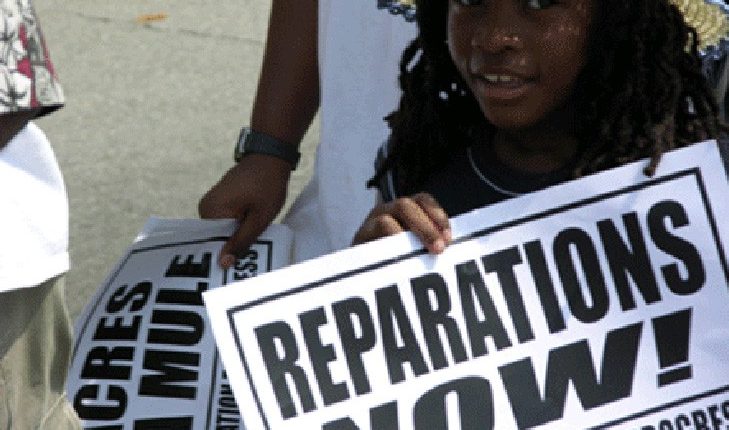
A summary of key decisions Compiled by Jubilee SA*
The civil society reparations conference, “Opening Civil Society Dialogue on Reparations”, was held in Randburg on 27 and 28 August 2003. It was attended by some 50 organisations, including those of a national and more localised character. Participating organisations ranged from organisations interested in reparations to others actively bringing together people around reparations-related issues.
The conference had its origins in Government’s response to the Truth and Reconciliation Commission (TRC) in April this year, to which Jubilee and Khulumani responded by announcing a call to South Africans to come together to develop an alternative position on reparations to that announced by Government. The South African Council of Churches (SACC) also indicated an intention to hold a conference and efforts were made to work towards a single civil society event. These efforts were hampered by tensions, leading to a meeting convened by Archbishop Ndungane. The Archbishop’s initiative resulted in the establishment of a steering committee to organise the conference. A Jubilee preparatory event, attended by 35 organisations, was held on the dates originally scheduled for the conference, namely 18 and 19 July 2003.
The steering committee comprised the Anti- Privatisation Forum (APF), the Congress of South African Trade Unions (COSATU), the Environmental Justice Networking Forum (EJNF), Jubilee South Africa, the Khulumani Support Group, the National Congress of Trade Unions (NACTU), the National Land Committee (NLC), the National Religious Leaders Forum (NRLF), the SACC, the South African National Civic Organisation (SANCO), the South African NGO Coalition (SANGOCO) and the Women’s National Coalition (WNC).
Archbishop Njongonkulu Ndungane opened the conference. The Minister of Justice, Penuell Maduna, presented Government’s position on reparations and Advocate Dumisa Ntsebeza and Father Michael Lapsley critiqued the TRC and Government’s response to the TRC. They also spoke about the reparations lawsuits filed in the United States. Khulumani also presented their critique of Government’s response to the TRC. Jubilee and the Apartheid Claims Taskforce described the process towards and developments in relation to the lawsuits. COSATU, the Landless Peoples Movement (LPM), EJNF, the APF and SANCO talked about reparations and the workplace, the land, the environment and the community, respectively.
The Freedom of Expression Institute highlighted the need to address the role of the media under Apartheid.
The final sessions of the conference identified areas of agreement amongst the participating organisations. Two kinds of decisions were made. Firstly, organisations reached a common understanding on who the “victims” of apartheid are, what constitutes reparations and who should pay. Secondly, the conference reached agreement in relation to responses to the TRC, the lawsuits and a reparations movement.
Who are the “victims”?
The negative connotation of the word “victims” was raised and alternative terms such as those ‘affected’ or ‘survivors’ were suggested as being more appropriate. The structural, psychological and physical aspects of damage caused by Apartheid were raised. The following were described as affected people:
People directly affected by Apartheid violence, including police and military brutality
All other South Africans more “indirectly” affected by Apartheid
~ People dispossessed of their land, including those dispossessed of their land before 1913
People removed to make way for dams and plantations
~ Workers suffering low wages and appalling working conditions
People in the townships
Workers and communities affected by industrial and mining pollution, including those suffering ill health as a result Fisherfolk
People victimised in the post-1994 period affected people throughout the Southern African region
This was not seen as a definitive or exhaustive definition of those affected.
What constitutes reparations?
It was agreed that reparations has a monetary component, and that this component is both legitimate and necessary.
Other forms of reparations were mentioned, including:
~ Individual and collective reparations
~ Targeted reparations and reparations for the whole society
Debt cancellation as a form of resources for reparations
~ Exhumation and reburial
~ Memorials
~ The forms of reparations identified in Volume 5 of the TRC report
Uncovering the truth Historical documentation rewriting our history Education
Reparations as an element of change to a more equitable society
Socio-economic development was seen as a form of repairing historical inequities, but it was stressed that general government policies and development activities are not a substitute for other forms of reparations.
Who should pay and who should effect reparations?
It was agreed that the money is there and that all those who benefited from Apartheid should pay. More specifically, business, local and foreign, should pay. Foreign governments that supported Apartheid and business activity in contravention of sanctions also have an obligation to make reparations.
Government has a major responsibility, and needs to identify mechanisms to increase income from business.
It was noted that reparations is a complex issue but that this should not deter us from addressing the complexities. On the contrary, it is important to locate individual struggles for reparations within the broader context and for people, communities and organisations to support each other ’s struggles as part of the broader struggle for reparations.
Responses to the TRC
The conference agreed that Government’s response to the TRC recommendations is inadequate. The amount of R30 000 is less than a quarter of the amount recommended by the TRC as long ago as 1998. The announcement that 19 000 affected people are due to receive this amount fails to address the vast numbers of people affected. The TRC recommendations themselves are absolutely minimal, representing less than one half a percent of the national budget and fall well short of what could be provided.
Khulumani made various proposals for structures and services to meet the needs of those affected, including the establishment of a reparations desk at the highest level, better resourcing of the National Prosecuting Authority and the inclusion of victim representatives in all memorialisation projects.
The conference endorsed the spirit of these and other proposals made during the conference. Due to time considerations, the conference could not consider the proposals in detail. The consolidated proposals were circulated in written form and all organisations agreed to forward detailed comments on the specific proposals.
Reparations Lawsuits
The conference stressed the right of all affected South Africans to legal action in any court that best represents their interests, including in courts outside South Africa. The conference expressed support for the litigation in the United States against Apartheid-supporting foreign companies.
The conference recognised that lawyers have to take their mandate from the plaintiffs and that the conference had no powers in this regard. The conference stressed, however, that those affected in South Africa must lead the legal process, and that organisation on the ground in support of the lawsuits must be strengthened. The lawsuits must be located within a broad view of reparations and they must be embedded in a reparations movement.
The conference encouraged lawyers to work together in the best interests of all affected.
It was noted that current litigation is only the beginning and that those that aided and abetted Apartheid, both foreign and local, must make reparations.
The conference agreed on the need for more dialogue and increased levels of cooperation amongst the participating organisations. It agreed on the need for more education around and pamphlets on the lawsuits. Participants agreed to deepen grassroots support for the lawsuits and work towards maximum unity.
The spokesperson for the SACC indicated that the SACC couldn’t take a position on the specific lawsuits before the US courts.
Mediation and the attitude of government and business
Participants expressed their openness to dialogue, mediation and settlement and encouraged Archbishop Ndungane to take the lead in dialogue.
The conference noted the antagonistic approach of business. It condemned business for its failure to respond positively to the invitation to address the conference and identified this as a slap in the face. The conference also noted that Government is taking the side of business, as evidenced by its affidavit to the US court calling for the dismissal of the lawsuits.
It was noted that dialogue or mediation requires a fundamental change of approach by business and government. This includes full disclosure by business of their activities. The conference demanded that Government withdraws its affidavit to the US court. It agreed to look into the constitutionality of the Government’s approach in making the affidavit and to the possibility of a civil society affidavit to the court. It was stressed that any mediation or settlement on a specific claim should not close the door on other potential claimants’ rights to pursue the legal route. The need to unpack what is meant by mediation was identified.
A Reparations Movement
The conference agreed to work towards building a reparations movement. It was agreed that this movement should include different organisations, enhance communication and relationships between the organisations and support each other ’s struggles.
The conference agreed that the Apartheid Debt and Reparations Task Team should act as a point of coordination for the movement and that it should be expanded to include organisations not currently part of the task team. The task team should carry forward work in progress and tasks arising from the conference. Partners of the Interfaith Mission in Southern Africa and the South African Reparations Movement indicated an interest in being part of a broader reparations movement. The conference agreed on the need to avoid confusion between the broad reparations movement and the South African Reparations Movement. The conference was informed of the call by the President’s Office for a list of participants to the conference and expressed its condemnation of this approach as an invasion of participants’ rights.
*Jubilee South Africa brings together organisations and individual activists committed to the struggle to cancel Third
World debt in general, and South Africa’s apartheid debt in particular.
Leave a Reply
You must be logged in to post a comment.